
The Evolving Management of Ectatic Corneal Disease
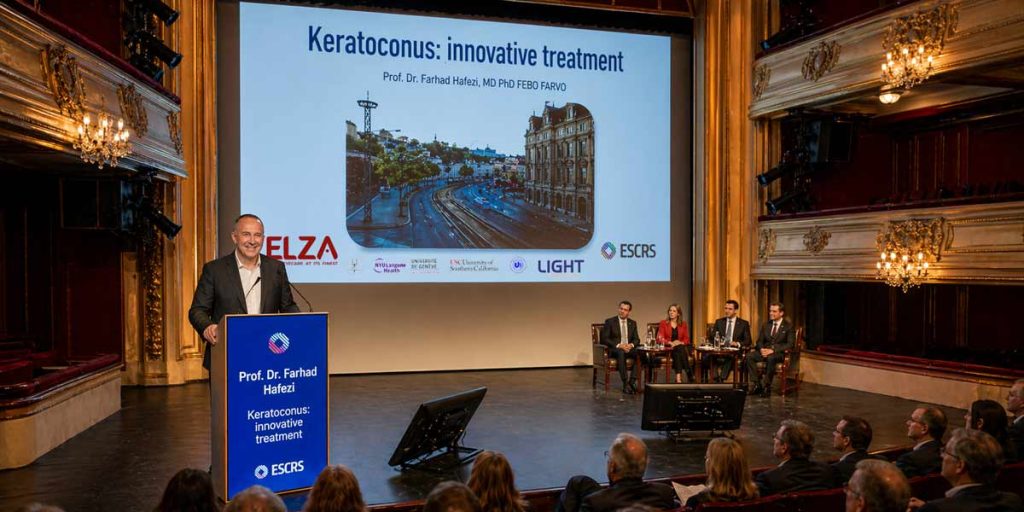
Can the management of keratoconus ever truly be standardized when the biological response of the cornea remains so individual? This question sits at the center of modern corneal surgery, particularly as practitioners move away from reactive treatments toward early, evidence-based intervention. On April 24, 2026, the Eye Clinic “Prof. dr Ivan Stanković” KBC Zvezdara in Belgrade marked its 60th anniversary by hosting “Current in Ophthalmology,” a symposium that underscored the ongoing shift from traditional surgical paradigms to personalized, innovative approaches.
Clinical Context and the Threshold for Intervention
For decades, the primary goal in treating keratoconus was visual rehabilitation, often involving rigid contact lenses or, in advanced cases, penetrating keratoplasty. The introduction of corneal cross-linking (CXL) fundamentally altered this trajectory by providing a method to arrest disease progression. However, as discussed by Prof. Farhad Hafezi of the ELZA Institute during the Belgrade Jubilee, the clinical focus has now expanded beyond mere stabilization. The current challenge lies in balancing the timing of intervention with the nuances of individual patient biology.
While the efficacy of the Dresden protocol is well documented, the limitations of a one-size-fits-all approach are increasingly apparent. Factors such as corneal thickness, patient age, and the rate of progression necessitate a more refined strategy. The evidence now suggests that innovative treatment is not defined by a single technology, but by the ability to adapt photochemical parameters to the specific biomechanical needs of the eye.

Examining the Limits of Modern Transplantation
Even with earlier intervention, the need for corneal transplantation remains a reality for many patients with advanced ectasia or scarring. The symposium highlighted the transition from full-thickness penetrating keratoplasty to lamellar techniques, such as DALK and DSAEK. These modern approaches offer a clear biological advantage by preserving the patient’s own endothelium, yet they are not without trade-offs.
The surgical complexity of lamellar procedures is higher, and visual outcomes, while often superior in the long term, depend heavily on the interface quality between donor and host tissue. Furthermore, discussion around artificial corneas suggests that while they remain an important option for complex cases, they have not replaced the clinical preference for human donor tissue in primary ectatic disease. The biological plausibility of long-term synthetic integration remains under investigation rather than established clinical fact.
Measured Implications for Future Practice
The data presented in Belgrade reinforce the idea that the last decade of ophthalmology was defined by the widespread adoption of intravitreal therapies and refractive lasers, whereas the next decade may be defined by the refinement of these tools. There is a clear shift toward protocols that prioritize preservation of corneal microstructure.
This evolution does not justify departure from established safety profiles, but it does support a more critical approach to patient selection. The evidence supports the use of customized CXL and advanced lamellar surgery, yet it does not support their universal application without careful consideration of cost–benefit balance and the specific clinical environment.
Closing Reflections
As the field marks milestones such as the 60th anniversary of the Zvezdara clinic, attention increasingly turns to whether current diagnostic tools can reliably predict which corneas will respond to treatment and which will continue to progress. The shift toward innovative treatment strategies is notable, but it raises a fundamental question: are we still treating corneal shape, or are we beginning to address the underlying biomechanical instability that defines the disease?
