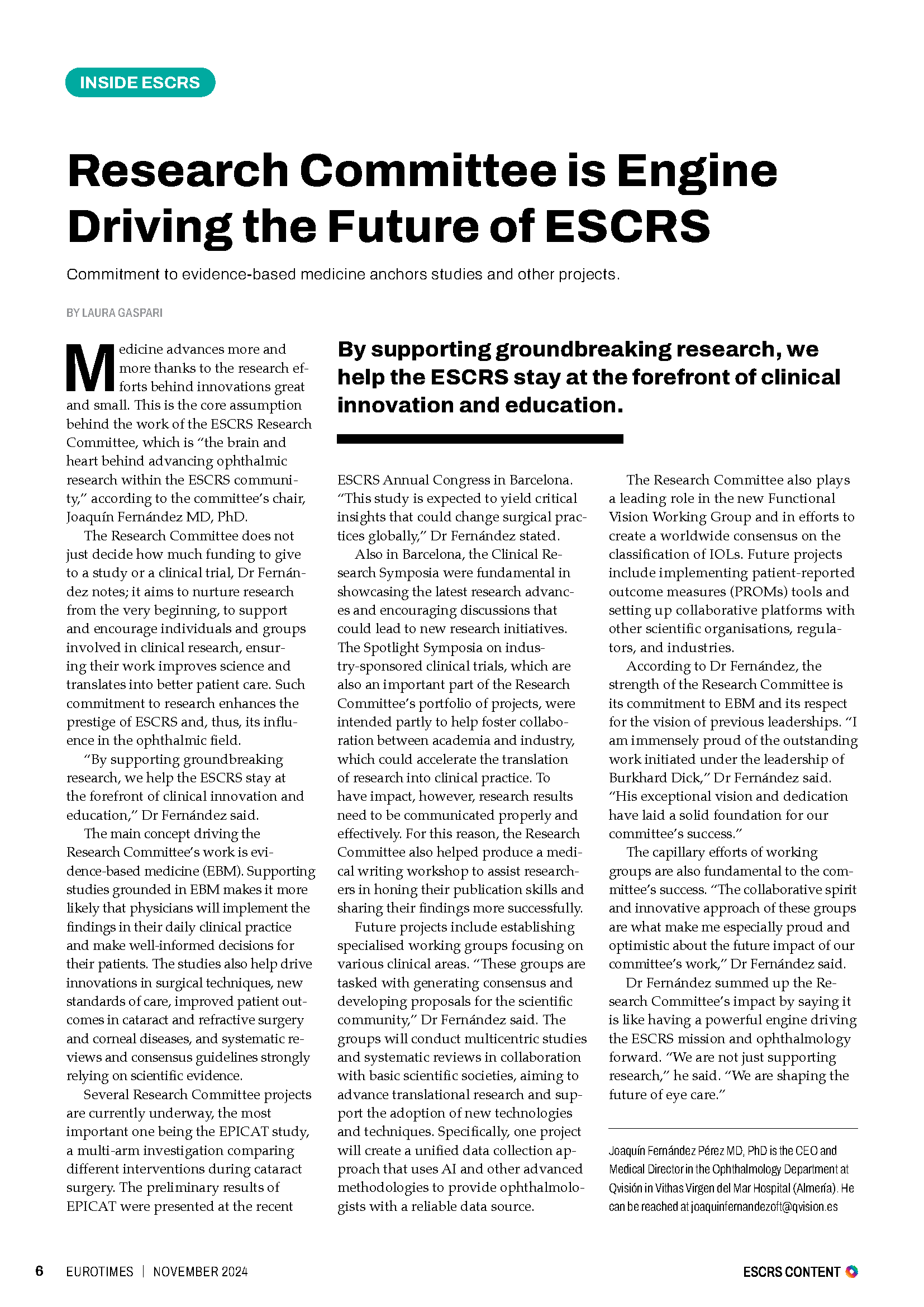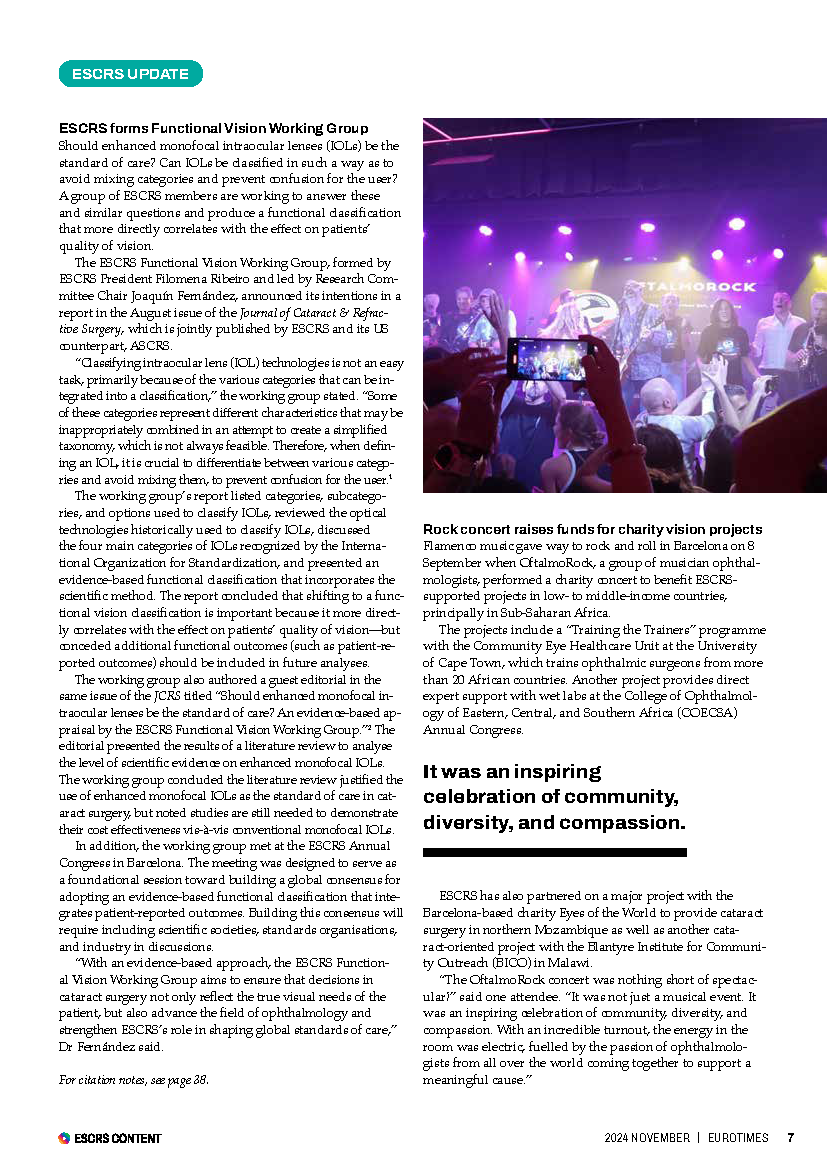
Progress in ophthalmology depends not only on innovation, but on the structures that allow innovation to be tested, validated, and translated into clinical care. An article published in EuroTimes (November 2024) offers a detailed look at how the European Society of Cataract and Refractive Surgeons (ESCRS) Research Committee fulfils this role by embedding evidence-based medicine into every stage of research development
Rather than functioning solely as a funding body, the ESCRS Research Committee is positioned as a facilitator of high-quality clinical research from inception to dissemination. As outlined in the article, its remit includes mentoring investigators, supporting multicentre collaboration, and ensuring that research outputs are clinically relevant and methodologically robust. This approach reflects a deliberate shift away from isolated studies toward coordinated programmes capable of informing standards of care.
A defining principle guiding the Committee’s work is adherence to evidence-based medicine. By prioritising studies grounded in reproducible data and peer-reviewed methodology, ESCRS aims to increase the likelihood that research findings are adopted into daily practice. This strategy underpins work across cataract, refractive, and corneal surgery, including systematic reviews and consensus initiatives that rely on cumulative evidence rather than expert opinion alone.
Ongoing projects illustrate the scope of this effort. Large, multicentre studies such as EPICAT are designed to evaluate surgical interventions in real-world settings, while dedicated symposia and clinical research forums provide platforms for critical discussion and refinement of study design. In parallel, the Committee supports initiatives focused on how outcomes are measured, including the integration of patient-reported outcome measures and functional vision metrics.
The article also highlights the role of structured working groups in driving progress. These groups operate across subspecialties and are tasked with identifying knowledge gaps, developing consensus frameworks, and proposing collaborative studies. Emerging priorities include the use of large datasets, artificial intelligence–supported analysis, and harmonised data collection methods, all aimed at improving comparability and clinical relevance.
From an ELZA perspective, this emphasis on structured evidence generation closely aligns with contemporary approaches to corneal and refractive care, where treatment decisions increasingly depend on validated protocols, long-term data, and consensus-driven classification systems. The ESCRS model demonstrates how professional societies can act as custodians of clinical standards by ensuring that innovation is accompanied by rigorous evaluation.
In an era of rapidly evolving technologies, the message from EuroTimes is clear: sustainable progress in ophthalmology depends on research frameworks that are as carefully designed as the devices and techniques they evaluate.