Digital devices dominate modern daily life, raising persistent concerns about their impact on eye health. An article published in Beobachter (10/2024) examines what happens in the eye during prolonged screen use and separates common assumptions from physiological reality, drawing on expert insights from Hendrik Scholl and Farhad Hafezi.
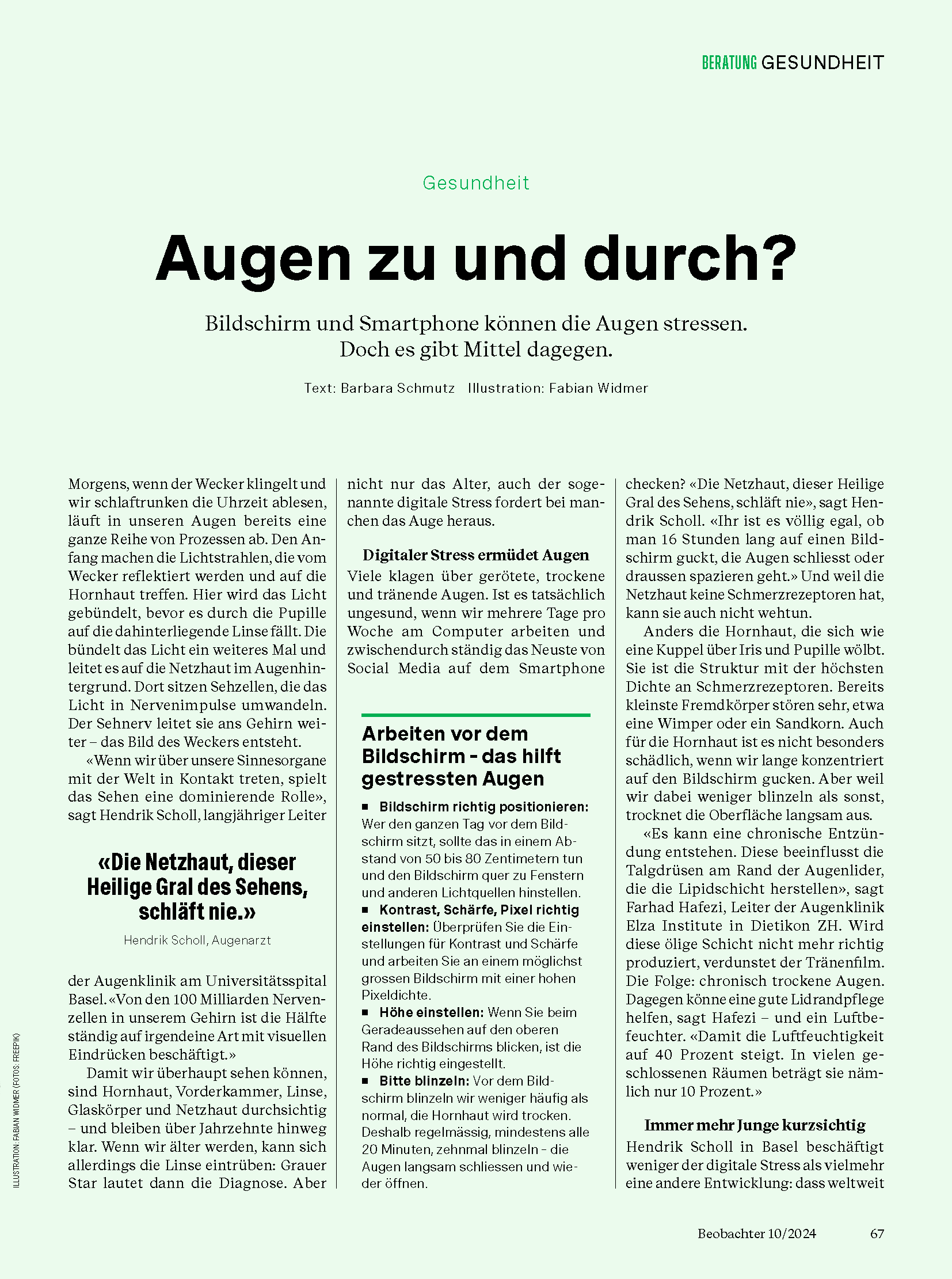
Vision begins as light reflected from an object passes through the cornea, lens, and vitreous body before being converted into neural signals by the retina. While the retina plays a central role in vision, it is notably insensitive to pain and remains metabolically active regardless of whether we are reading, outdoors, or looking at a screen. As Prof. Scholl explains, extended screen exposure does not damage the retina itself.
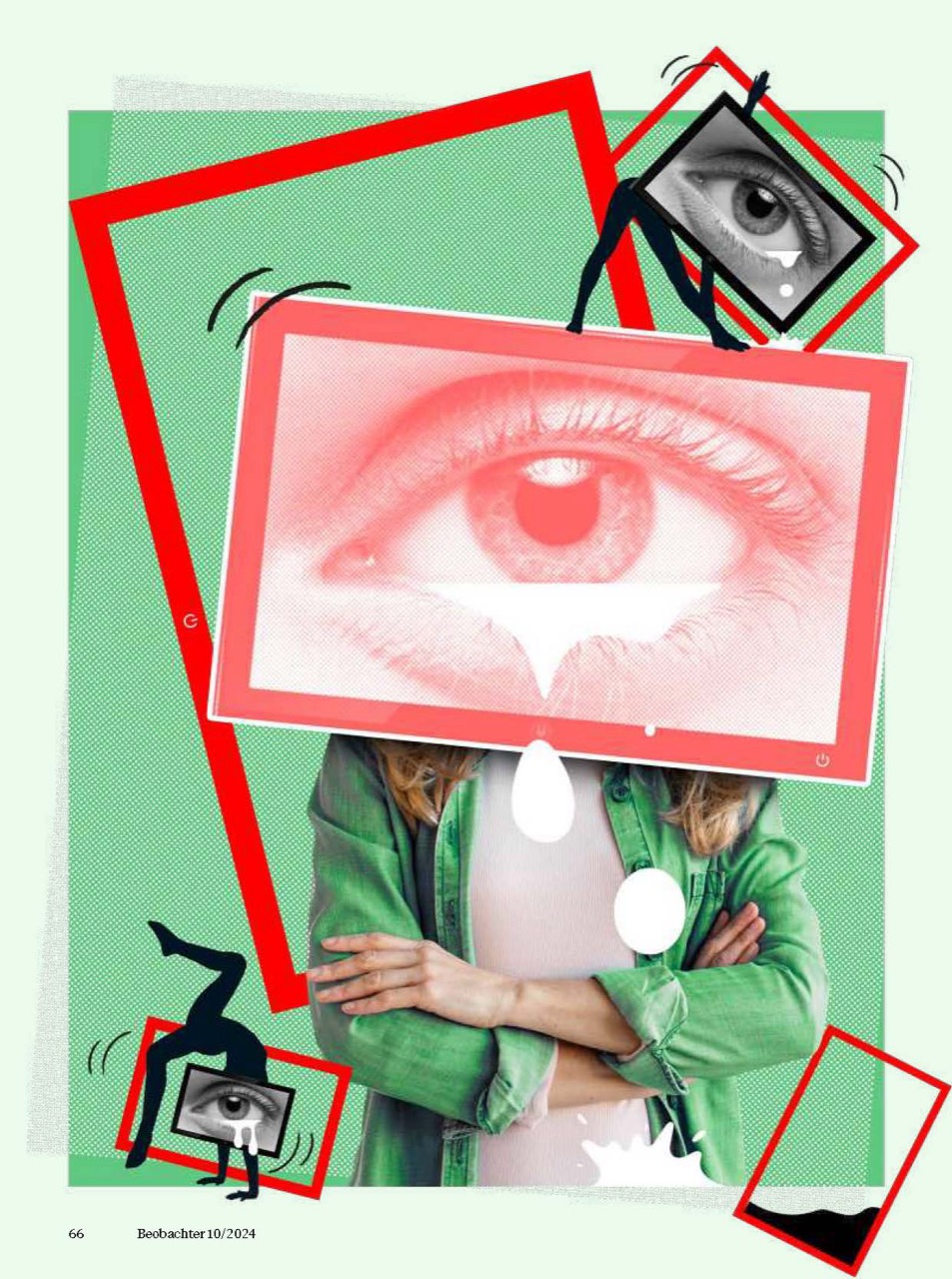
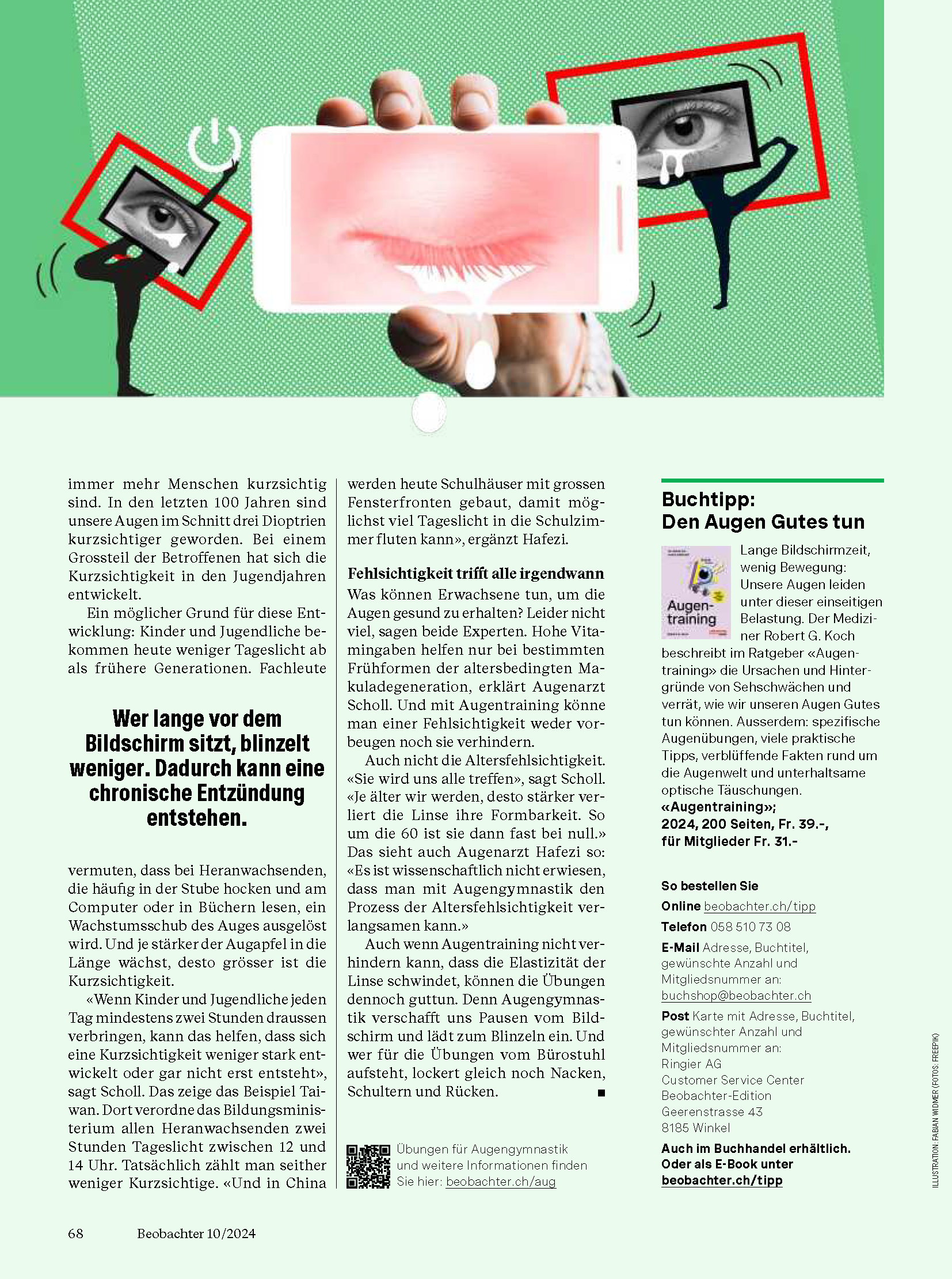
The cornea, however, tells a different story. As the most densely innervated tissue in the human body, it is highly sensitive to surface changes. Prolonged screen use is associated with a reduced blink rate, which can destabilize the tear film and lead to increased evaporation. Over time, this may promote chronic surface inflammation and dysfunction of the meibomian glands at the eyelid margin, which are responsible for producing the lipid layer of the tear film.
According to Prof. Hafezi, impairment of this lipid layer accelerates tear film evaporation, contributing to symptoms of dry eye disease such as burning, redness, tearing, and fluctuating vision. Importantly, this process is not driven by screen light itself, but by altered blinking behavior and environmental factors. Low indoor humidity—often as low as 10% in enclosed spaces—further exacerbates ocular surface dryness. Lid hygiene and improving ambient humidity to around 40% are cited as practical supportive measures.
Beyond digital eye strain, the article highlights a broader and more consequential trend: the global rise in myopia. Over the past century, average refractive error has shifted by approximately three dioptres toward myopia. Both experts emphasize that this change is driven primarily by childhood visual habits rather than adult screen use. Reduced exposure to daylight during critical developmental years is thought to stimulate axial eye growth, increasing the risk and severity of myopia.
Evidence from East Asia suggests that regular outdoor exposure—at least two hours daily—can slow myopia progression or reduce its onset. While adults have limited options to prevent age-related refractive changes such as presbyopia, regular breaks from near work, conscious blinking, and ergonomic screen setup remain sensible measures to reduce ocular discomfort.
From an ELZA perspective, the article reinforces an important clinical message: digital devices strain the ocular surface, not the retina, and long-term visual health depends as much on environmental and behavioral factors as on optical correction.