This Artificial intelligence (AI) is increasingly shaping how ophthalmologists diagnose disease and plan treatment, particularly in data-dense fields such as corneal imaging, refractive surgery, and cataract planning. In a February 2023 feature published in Cataract & Refractive Surgery Today (CRST), leading clinicians and researchers examine how AI is transitioning from theoretical promise to practical clinical application—and where its current limitations remain.
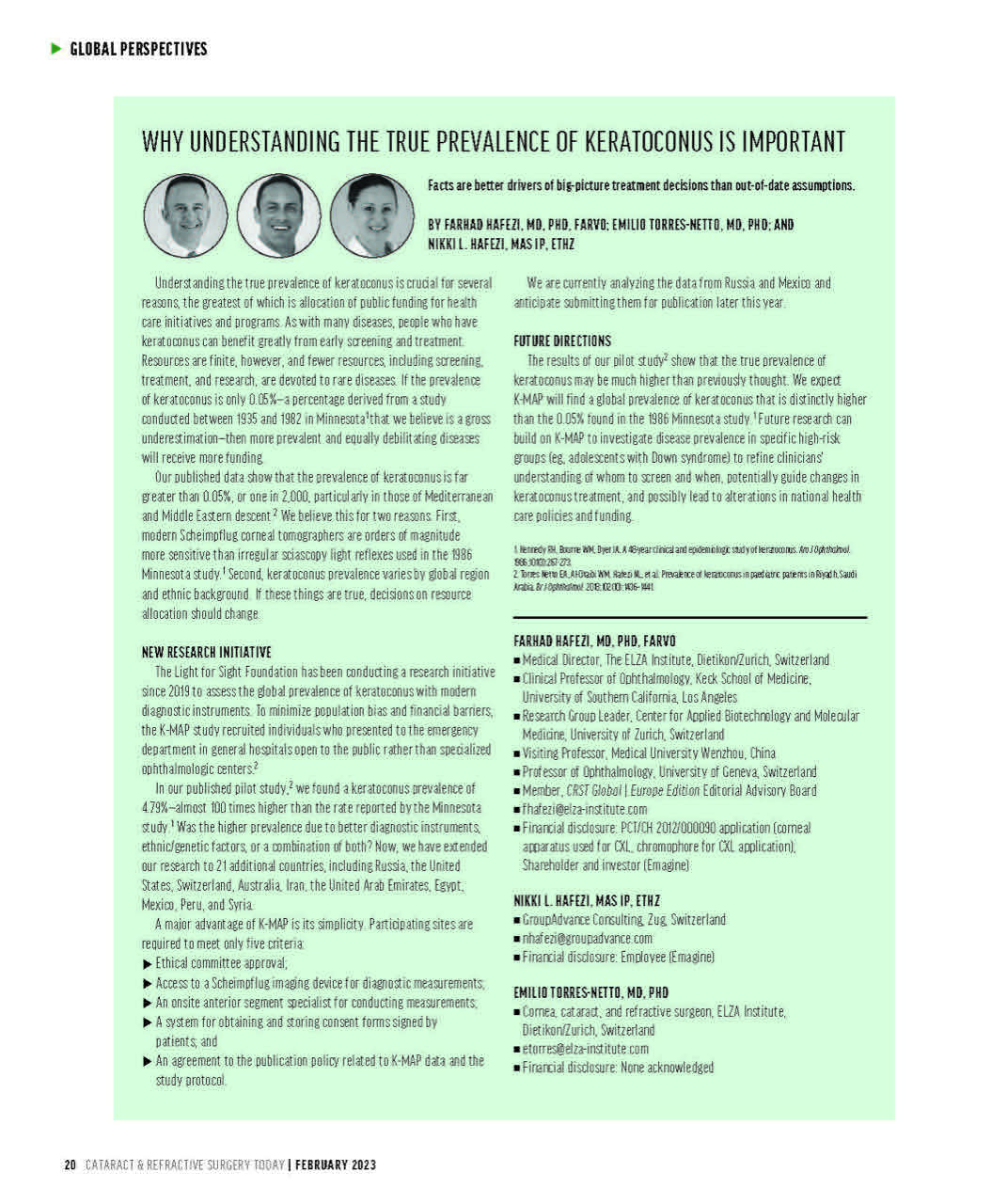
Among the contributors is Prof. Farhad Hafezi, MD, PhD, FARVO, Medical Director of the ELZA Institute, who co-authored a section addressing one of the most consequential questions in corneal care: the true prevalence of keratoconus and why accurate data matter for public health planning and early intervention.
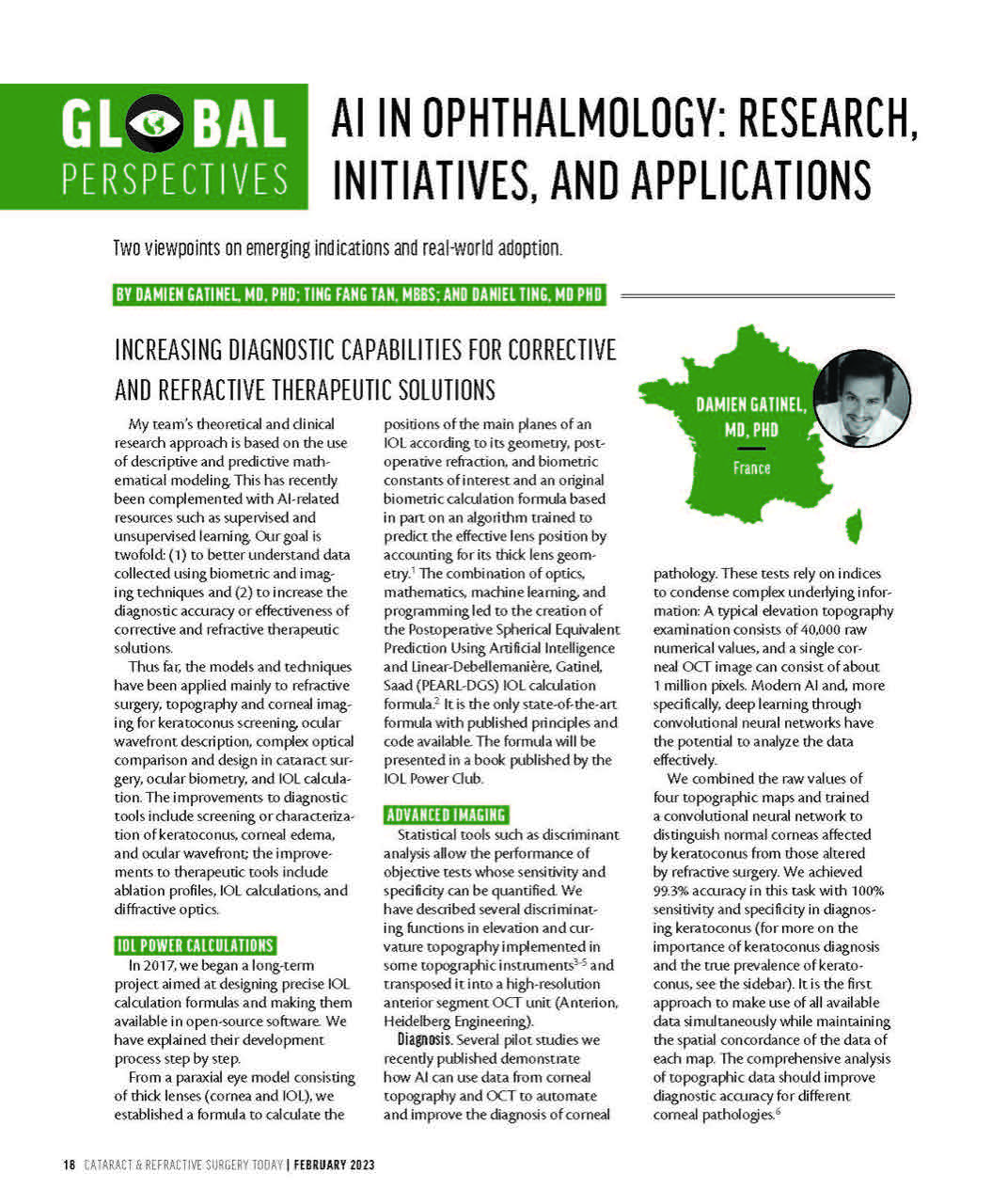
The CRST feature highlights that modern AI methods excel at extracting clinically relevant information from large imaging datasets, such as corneal topography and anterior segment OCT. These technologies allow complex raw data—tens of thousands of elevation points or millions of image pixels—to be condensed into meaningful diagnostic indices. Deep learning models, particularly convolutional neural networks, have demonstrated high sensitivity and specificity in distinguishing normal corneas from those affected by keratoconus or altered by refractive surgery. This is another useful application of artificial intelligence in ophthalmology.
In his contribution, Prof. Hafezi emphasizes that historical estimates of keratoconus prevalence, often cited as approximately 0.05%, are likely substantial underestimations. Earlier epidemiologic studies relied on diagnostic tools with limited sensitivity compared to today’s Scheimpflug tomography and OCT-based analysis. AI-supported screening, combined with modern imaging, has revealed markedly higher prevalence rates in several populations, particularly in regions with known genetic and environmental risk factors.
The article also outlines the K-MAP initiative, a multinational research effort designed to assess keratoconus prevalence using standardized modern diagnostics across diverse populations. By minimizing selection bias and lowering logistical barriers for participating centers, the project aims to generate data that can meaningfully inform screening strategies, resource allocation, and long-term eye-care policy. AI-driven analysis plays a central role in handling the scale and complexity of the resulting datasets.
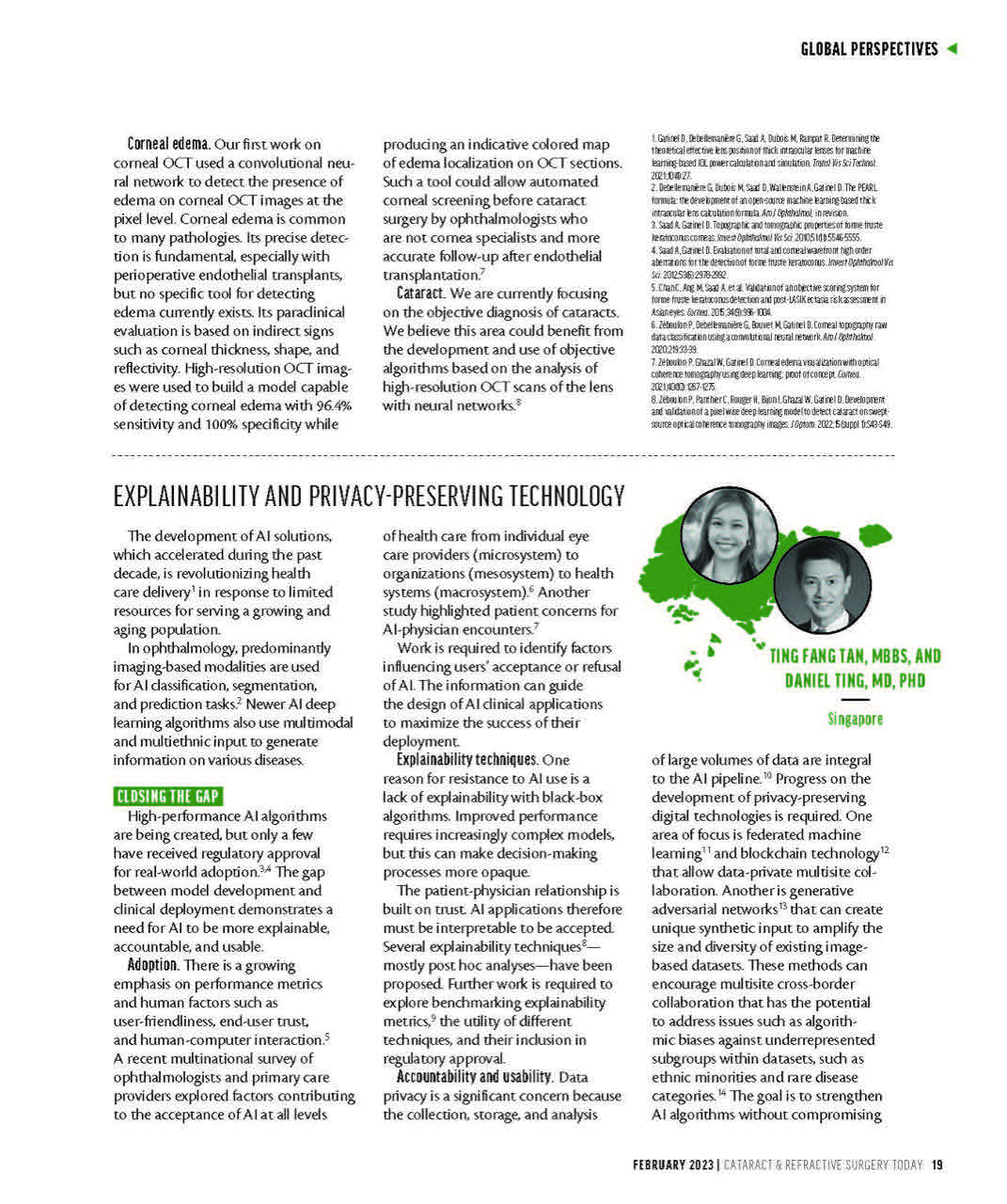
Beyond epidemiology, the CRST feature situates AI within a broader clinical context, including IOL power calculation, cataract diagnostics, and corneal edema detection. However, it also stresses that successful clinical adoption depends on explainability, data governance, and clinician trust—factors as important as algorithmic performance itself. This shows that artificial intelligence in ophthalmology can be a very powerful tool in delivering excellent eye care to patients.
At ELZA, these themes are reflected in ongoing research and clinical workflows that integrate advanced imaging, algorithm-supported analysis, and rigorous clinical validation. The CRST feature underscores a key message: AI is not a replacement for clinical judgment, but a powerful tool to enhance precision, consistency, and early disease detection when applied responsibly.