
Cross-Linking at the Slit Lamp technique: Now published in the JRS
Why would you want to perform corneal cross-linking at the slit lamp? Well, it is a powerful and versatile therapy, that can not only halt

Why would you want to perform corneal cross-linking at the slit lamp? Well, it is a powerful and versatile therapy, that can not only halt

We at the ELZA Institute are proud to report that our landmark paper that describes how the sub400 protocol is used to perform CXL in

“COVID-19 cannot prevent us from sharing important knowledge about oculofacical plastic surgery”, says Dr. Dion Paridaens, the ELZA Institute’s Consultant Oculofacial plastic surgeon. Dr. Paridaens
The reason why ELZA is an international leader in eye care is that we have superb clinicians… who also are also superb and prolific academic researchers. Last year, our clinicians published 68 unique papers – four more than in 2019, our previous record-breaking year!

An article in Ophthalmology Times Europe highlights modern keratoconus care, and features ELZA Medical Director Prof. Farhad Hafezi.

We took a biological approach to what has been classically viewed as a physics problem. If the laser ablation is causing inflammation, can we change how the laser energy is delivered to the cornea in order to cause less inflammation?

And so, at this year’s annual meeting of the European Society for Cataract and Refractive Surgery (ESCRS 2020), held online from 2–4 October 2020, a poster, presented by Dr. Emilio Torres-Netto, entitled “Corneal cross-linking for treating infectious keratitis: final results of the prospective randomized controlled multicentre trial” took first place in the Refractive Surgery category. The phase III trial results showed that corneal ulcers can be treated just as effectively with PACK-CXL as with the latest antibiotics, something that will soon become increasingly important.

What effect does corneal cross-linking have after 10 years? This August, ELZA doctor and researcher, Emilio Torres-Netto MD was interviewed by TouchOphthalmology on a recent congress presentation he gave on 10-year cross-linking follow-up data collated from two treatment centers in Zurich, and was asked about what the research group found.

On August 27–28th, 2020, some of ELZA’s surgeons and researchers attended the 113th Annual Congress of the SOG/SSO (the Swiss Ophthalmological Society).
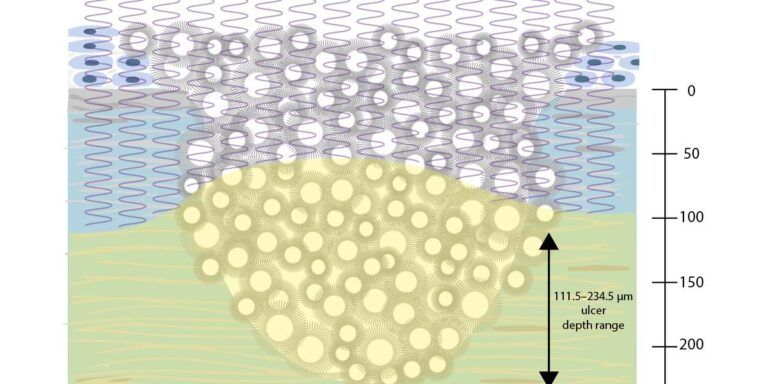
Treating infectious keratitis with CXL is not like treating keratoconus with CXL. We recently had to write a letter to the journal, Ophthalmology, to point out the flaws in a recent publication in the journal.
