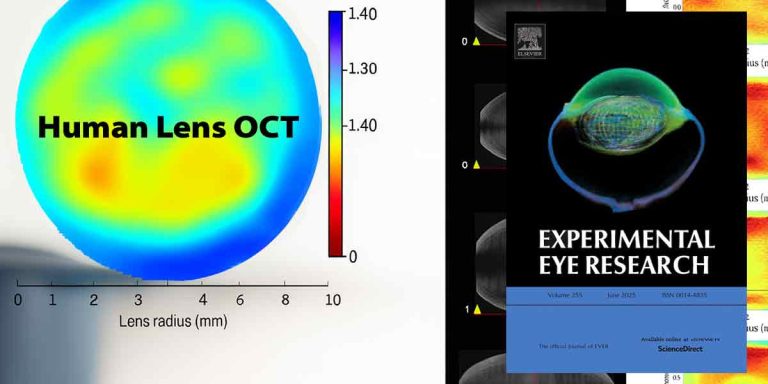
Human Lens OCT: Mapping Refractive Index and Strain in Action
Human lens OCT maps refractive index and strain, offering new insights into accommodation, ageing, and ocular biomechanics.

Human lens OCT maps refractive index and strain, offering new insights into accommodation, ageing, and ocular biomechanics.

We are proud to announce that ELZA Institute’s CEO, Nikki L. Hafezi MAS IP ETHZ, will serve as Course Director for a new international program in Uzbekistan — the “Professional Development Course in Visual Sciences and Public Health”.
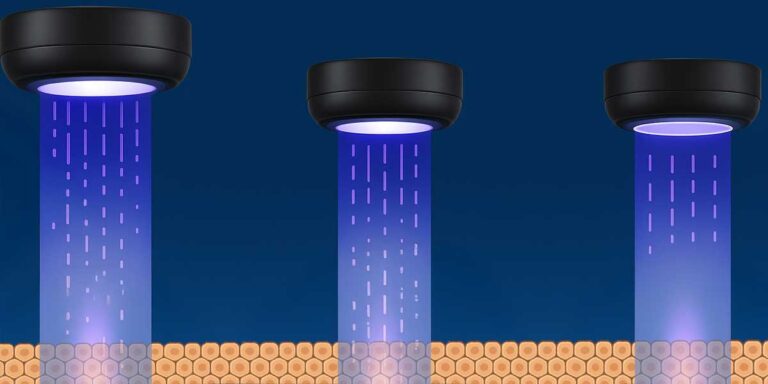
A new publication in JRS reports the long-term endothelial safety of the ELZA-sub400 protocol for treating progressive keratoconus in corneas thinner than 400 µm.

Transepithelial corneal cross-linking offers a new epi-on CXL protocol with biomechanical outcomes comparable to accelerated epi-off CXL for keratoconus treatment

At first glance, the numbers are reassuring. Over 90% of contact lens wearers in Switzerland feel they’re well-informed about handling their lenses. But ask them

Prof. Farhad Hafezi joins the Academia Ophthalmologica Internationalis at its 50th Anniversary General Assembly in Leiden, June 2025.
In CAKE Magazine (June 2025), Prof. Farhad Hafezi and international experts outline practical, individualized approaches to common corneal surface disease management in daily practice.

Dr. Kaweh Mansouri discusses glaucoma, AI, and modern eye care on Thomas Meyer’s podcast. ELZA Eye Institute Zurich.

Dion Paridaens shared updates at SOE and SECOP 2025, highlighting his and ESOPRS’s role in advancing oculoplastics across Europe.

At the Polish Ophthalmologists Congress, Prof. Farhad Hafezi presented innovative keratoconus treatments ELZA-PACE and ECO-CAIRS in Krakow.
