

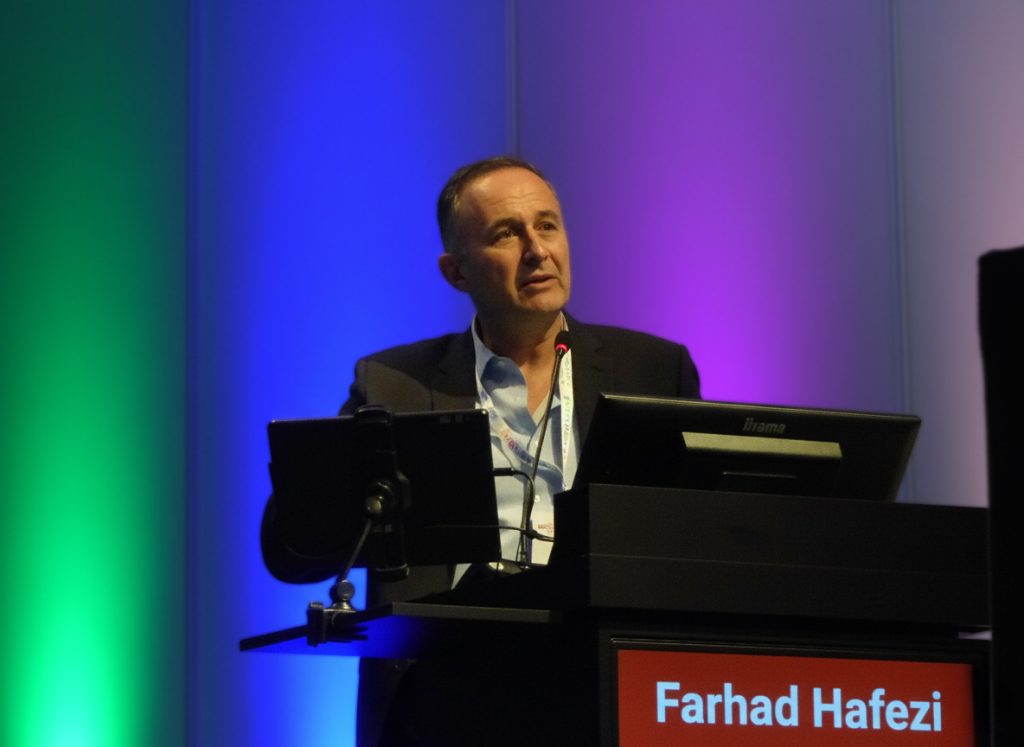
The management of keratoconus in children is one of the most pressing challenges in corneal medicine. Pediatric keratoconus often progresses faster and more severely than adult cases, making early and effective intervention critical to preserve vision. On September 24, 2025, Healio/ Oculary Surgery News reported on the II Global Consensus on Keratoconus, a landmark international collaboration that provides updated criteria for defining disease progression—particularly in children. They interviewed two key authors of the II Global Consensus document: Prof. Farhad Hafezi, MD, PhD, FARVO, and Prof. Cosimo Mazzotta, MD, PhD.
Defining progression in pediatric keratoconus
The consensus highlights the need for precise, standardized definitions of keratoconus progression. Key parameters include changes in keratometry, corneal thickness, and visual function. In children, these indicators tend to appear earlier and advance more rapidly, underscoring the urgency of timely monitoring and intervention. The consensus stresses that pediatric progression criteria must be stricter than adult benchmarks, reflecting the greater lifetime risk of severe ectasia.
Our role in shaping global standards
Prof. Farhad Hafezi, Medical Director of the ELZA Institute, served as one of the main coordinators of the II Global Consensus. Building on more than two decades of CXL translational research, Prof. Hafezi and his colleagues at ELZA have helped to establish clinical definitions and treatment standards now recognized worldwide. These contributions ensure that consensus recommendations are not only theoretically robust but also grounded in daily clinical practice.
By participating directly in drafting international guidelines, ELZA plays a pivotal role in developing frameworks that guide ophthalmologists worldwide. The inclusion of pediatric progression criteria in the consensus reflects both scientific advances and clinical realities observed in leading referral centres such as ours in Zurich.
Implications for patient care
For clinicians, the updated progression criteria provide clear decision points on when to initiate CXL in children. For patients and families, the guidelines offer reassurance that treatment is guided by internationally agreed standards. At ELZA, these consensus-driven approaches are embedded into individualized care pathways, ensuring that pediatric patients receive interventions aligned with the most current evidence.
Looking ahead
The II Global Consensus on Keratoconus represents more than an academic milestone—it provides a unifying framework for the next generation of keratoconus management. By contributing to this work, ELZA continues its mission of integrating research, guideline development, and patient care. The result is a more consistent, evidence-based approach to pediatric keratoconus, with the potential to preserve vision and quality of life for young patients worldwide.
