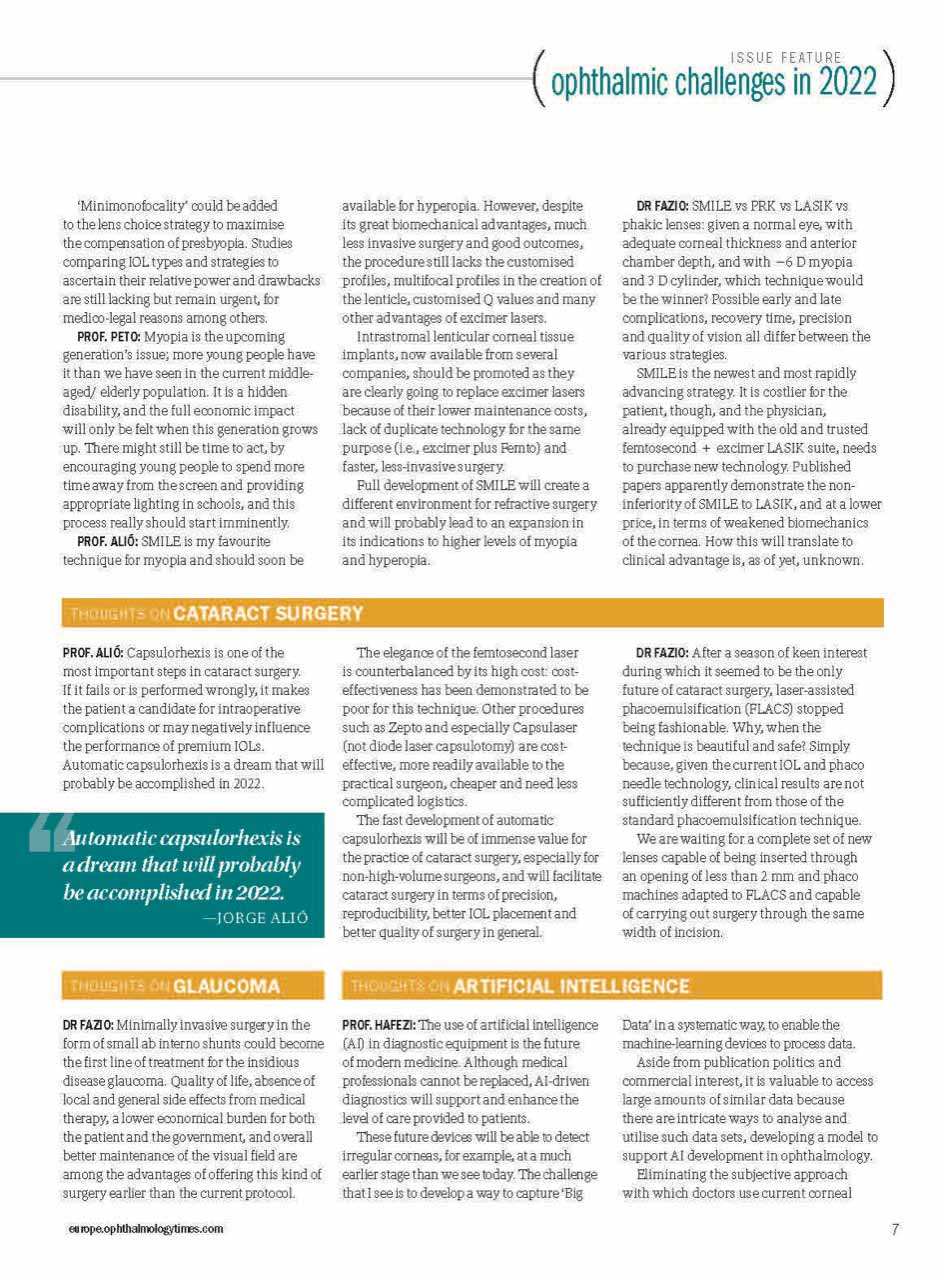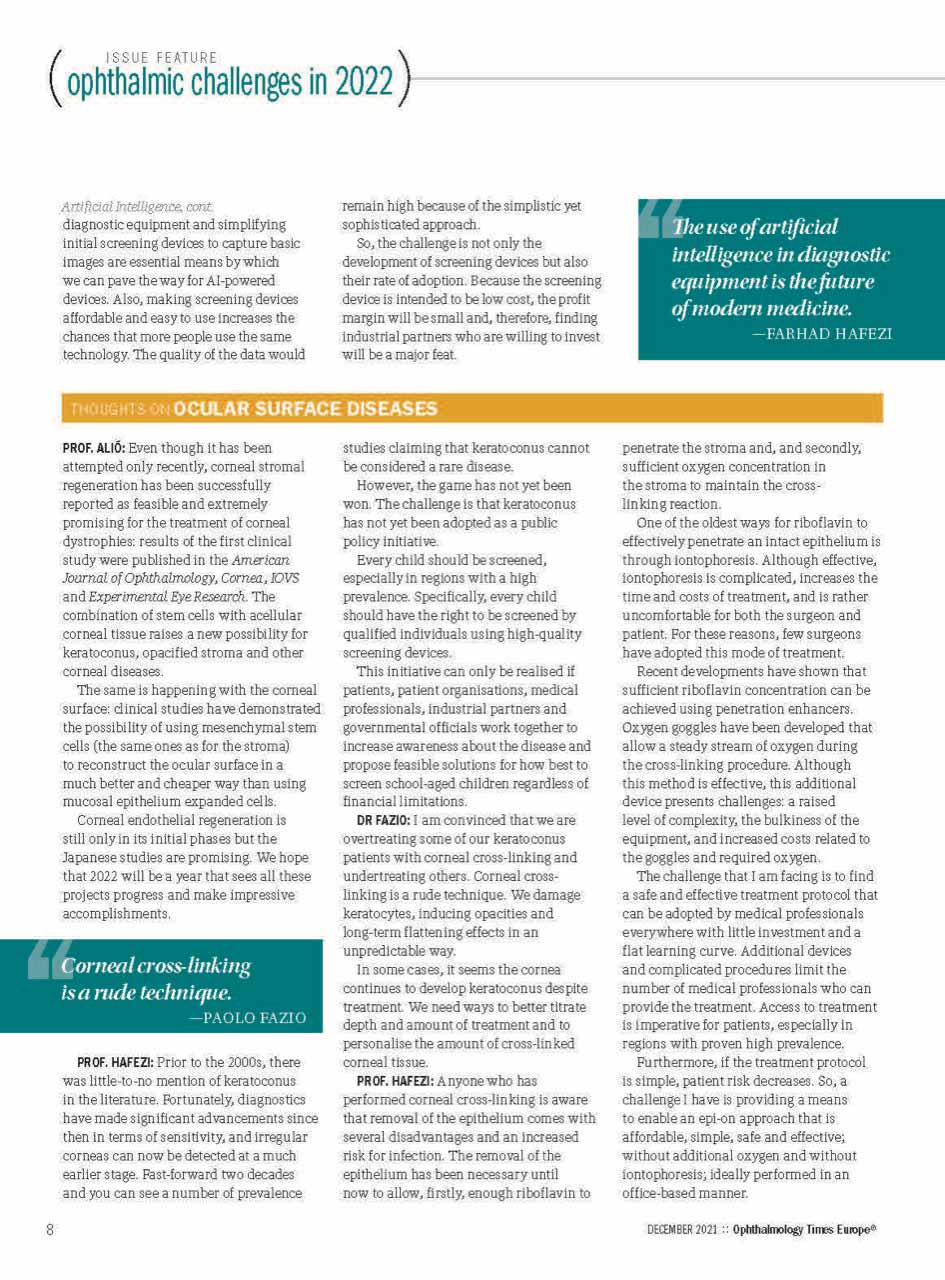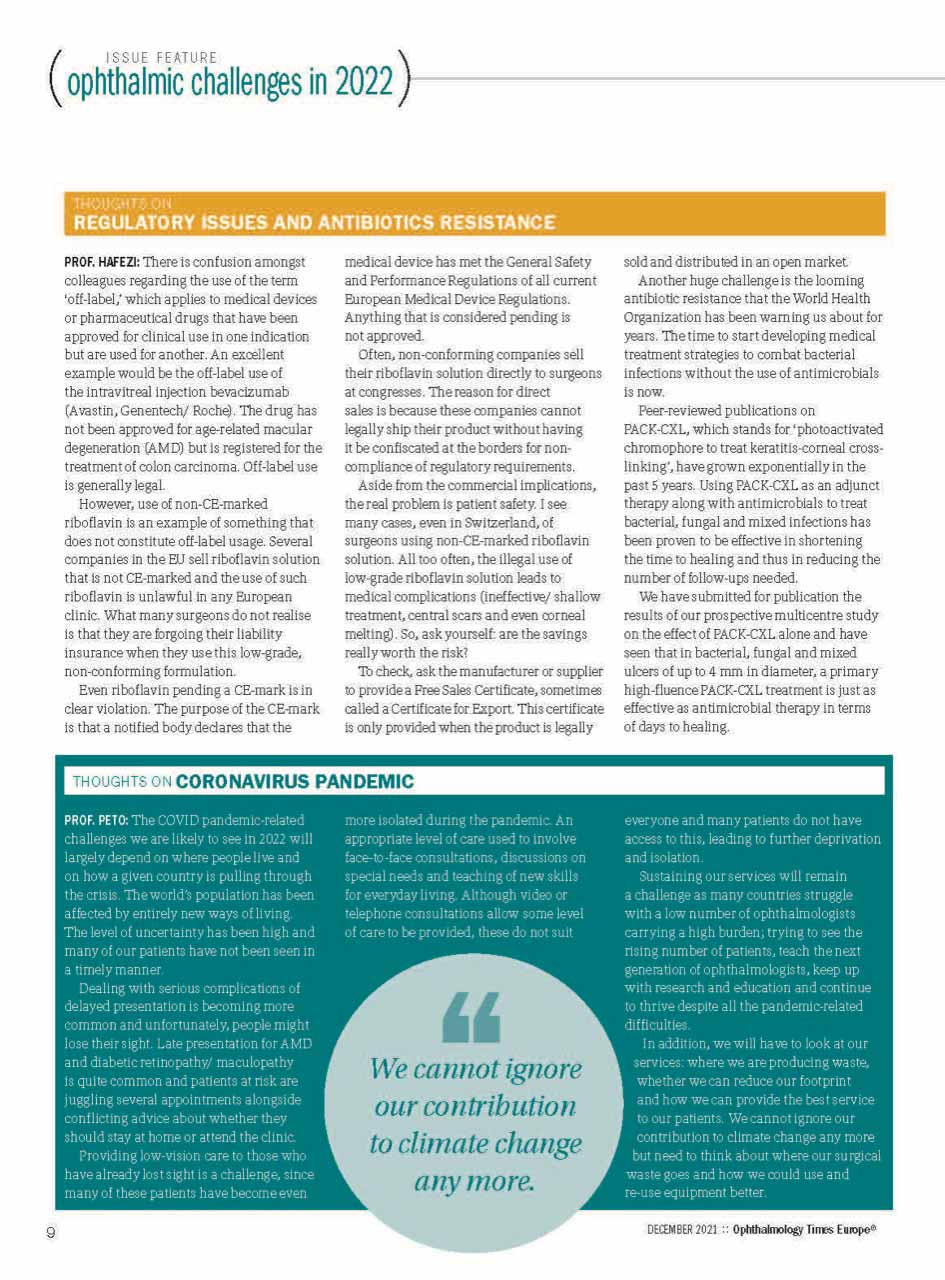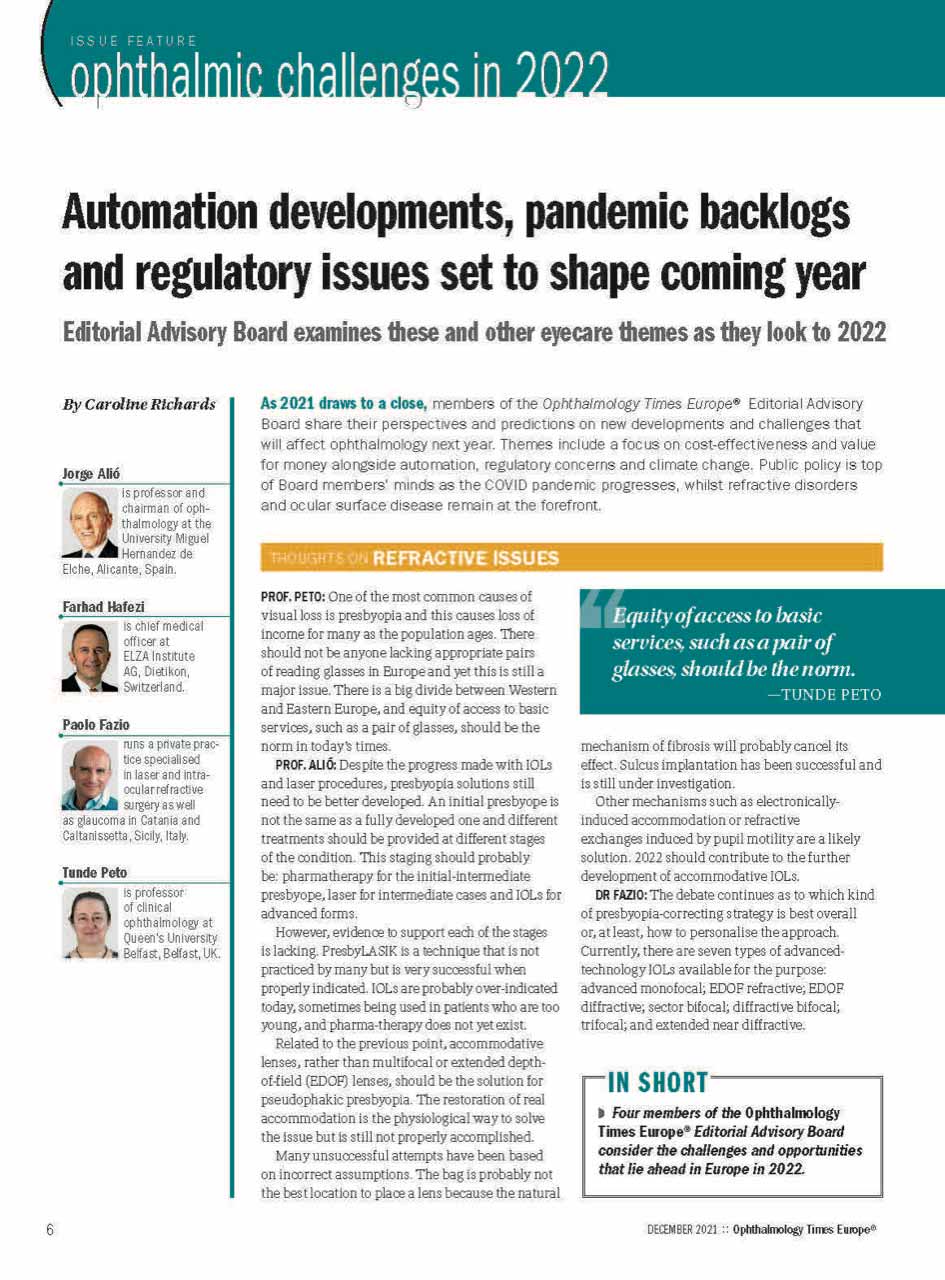
The December 2021 issue of Ophthalmology Times Europe highlights the evolving clinical challenges facing ophthalmology as the field enters a new year. Among the key topics featured on the cover is “Optimising visual function in keratoconus”, reflecting sustained clinical and scientific interest in improving outcomes beyond disease stabilization alone.
Keratoconus management has shifted substantially over the past decade. While halting progression remains a core objective, increasing attention is now placed on keratoconus visual function, corneal regularity, and long-term visual quality. This broader perspective aligns with contemporary approaches that combine biomechanical stabilization with strategies aimed at visual rehabilitation and individualized treatment planning.
The inclusion of keratoconus as a dedicated corneal focus in Ophthalmology Times Europe underscores its relevance not only as a subspecialty topic, but as a condition with implications across refractive surgery, cataract planning, and long-term patient care. Optimizing visual function in keratoconus requires careful integration of diagnostics, staging, and sequential interventions, rather than reliance on a single procedure.
ELZA’s expertise is represented in this issue through Prof. Farhad Hafezi, MD, PhD, FARVO, Medical Director of the ELZA Institute, whose clinical and research work has consistently focused on advancing keratoconus management. His contributions to the field span corneal cross-linking protocols, individualized treatment strategies, and the broader concept of moving from progression control toward functional rehabilitation.
The cover’s broader editorial context—addressing automation, cost-effectiveness, and surgical innovation—also reflects pressures currently shaping keratoconus care. As diagnostic technologies become more sensitive and treatment options more nuanced, clinicians are increasingly required to balance efficacy, safety, and resource allocation while maintaining realistic patient expectations.
At ELZA, keratoconus care is approached within this modern framework, integrating advanced diagnostics with evidence-based interventions and long-term follow-up to deliver the best-possible keratoconus visual function. The visibility of keratoconus in Ophthalmology Times Europe highlights how the condition continues to serve as a model for personalized corneal care in contemporary ophthalmology.