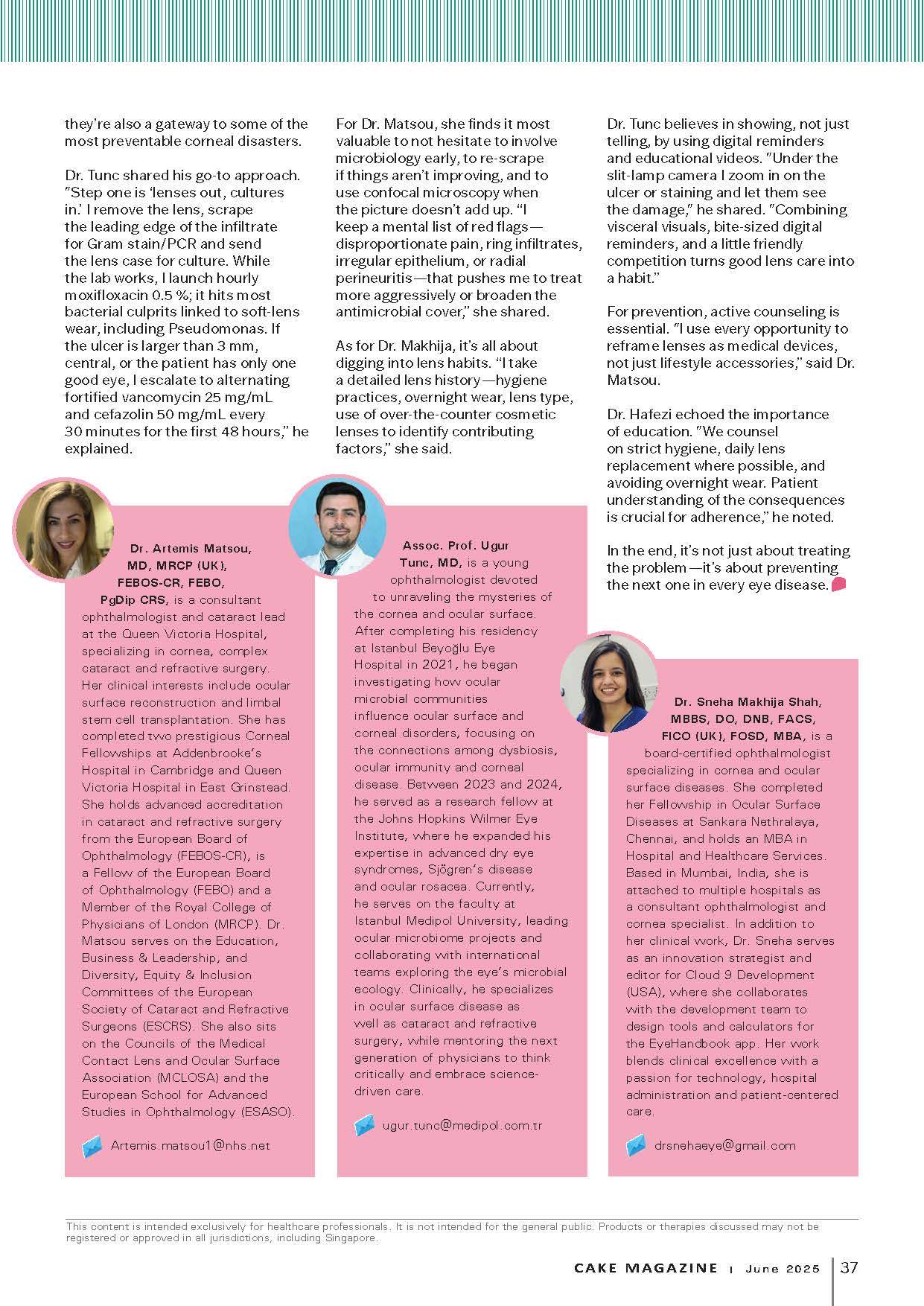
Corneal surface disease management remains one of the most frequent yet clinically nuanced challenges in ophthalmology. In its June 2025 issue, CAKE Magazine convened four internationally active corneal specialists to share practical, experience-based strategies for managing conditions encountered daily in clinical practice, including dry eye disease, allergic keratoconjunctivitis, infectious keratitis, pterygium, and contact lens–related complications Cake 26 Article Hafezi.
Among the contributors was Prof. Farhad Hafezi, MD, PhD, FARVO, ELZA’s Medical Director, whose comments consistently emphasized surface safety, individualized decision-making, and biologically sound escalation of therapy.
A central theme throughout the article was the heterogeneity of corneal surface disease. In dry eye disease, contributors stressed that symptoms often mask distinct underlying mechanisms. Rather than relying on uniform treatment pathways, the experts advocated identifying the dominant driver—evaporative, inflammatory, neurotrophic, or aqueous-deficient—and tailoring therapy accordingly. Prof. Hafezi highlighted preservative-free artificial tears as a foundational step, underscoring the role of preservatives as a known exacerbating factor for ocular surface damage.
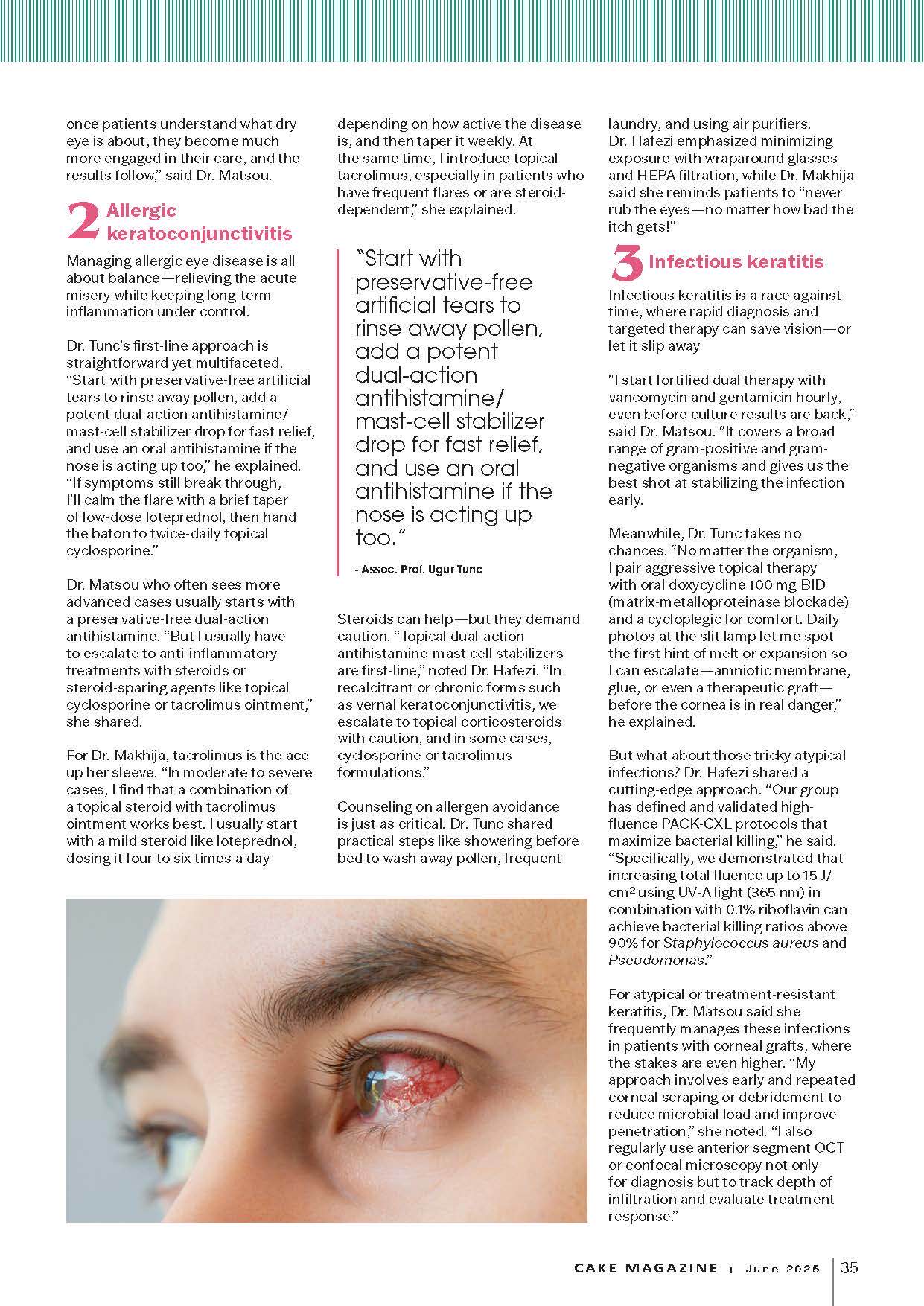
In allergic keratoconjunctivitis, balance emerged as the guiding principle. While topical dual-action antihistamine–mast-cell stabilizers remain first-line therapy, contributors noted that chronic or severe disease may require cautious escalation to topical corticosteroids or steroid-sparing agents such as cyclosporine or tacrolimus. Prof. Hafezi emphasized judicious use of these agents, particularly in recalcitrant cases, to control inflammation while minimizing long-term risk.
The section on infectious keratitis reflected the urgency and complexity of these presentations. Prof. Hafezi described high-fluence PACK-CXL protocols developed by his group as adjunctive strategies in selected bacterial infections, highlighting their potential to enhance microbial killing when used alongside standard antimicrobial therapy.
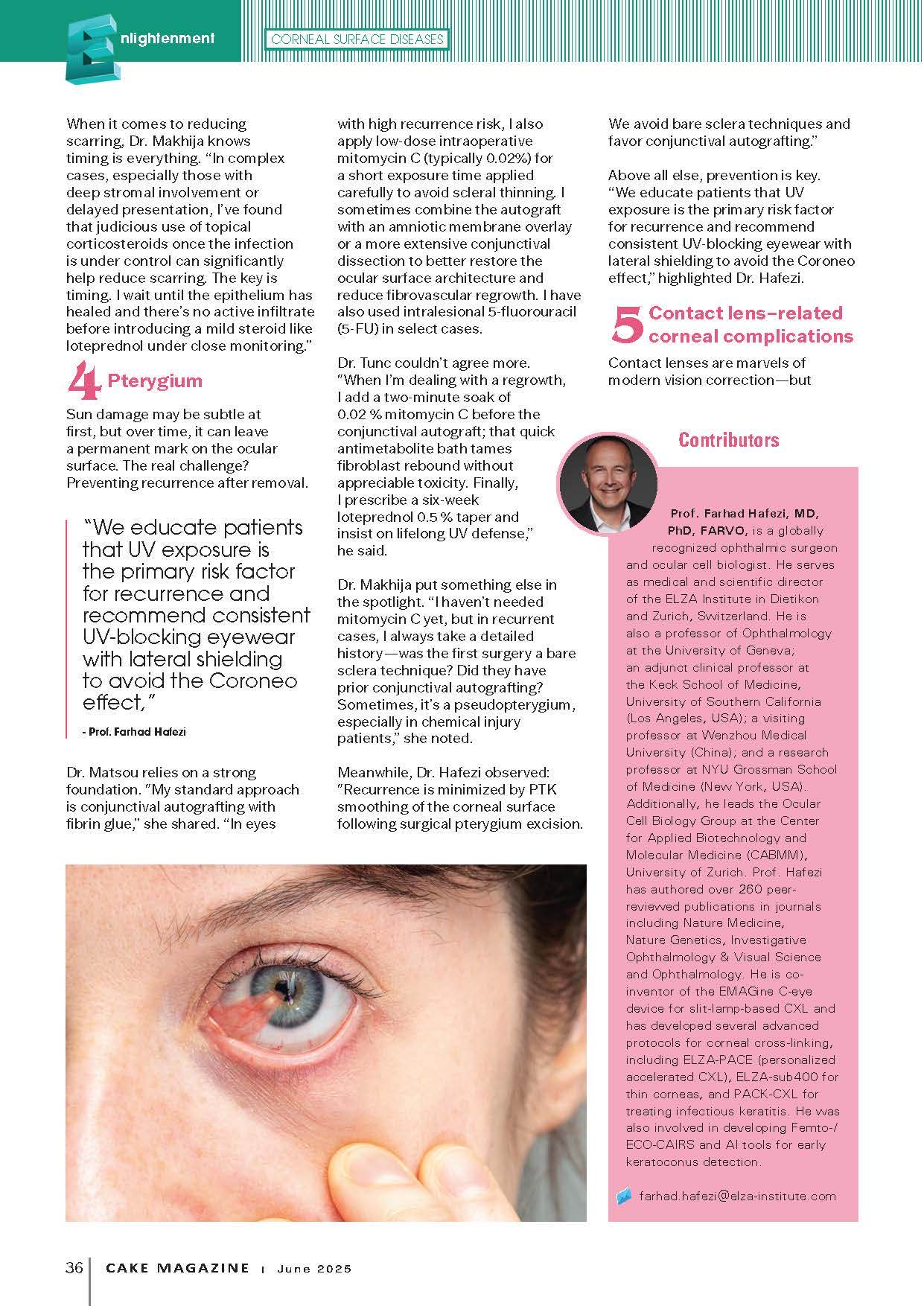
Preventive strategies were also emphasized in surgical and contact lens–related disease. In pterygium management, Prof. Hafezi pointed to surface regularization and UV protection as key factors in reducing recurrence. Across contact lens–related complications, all contributors agreed that patient education—framing lenses as medical devices rather than lifestyle accessories—remains central to prevention.
Collectively, the article reinforces a consistent message: effective management of corneal surface disease relies on individualized assessment, timely escalation, and sustained patient engagement, rather than rigid adherence to one-size-fits-all protocols.