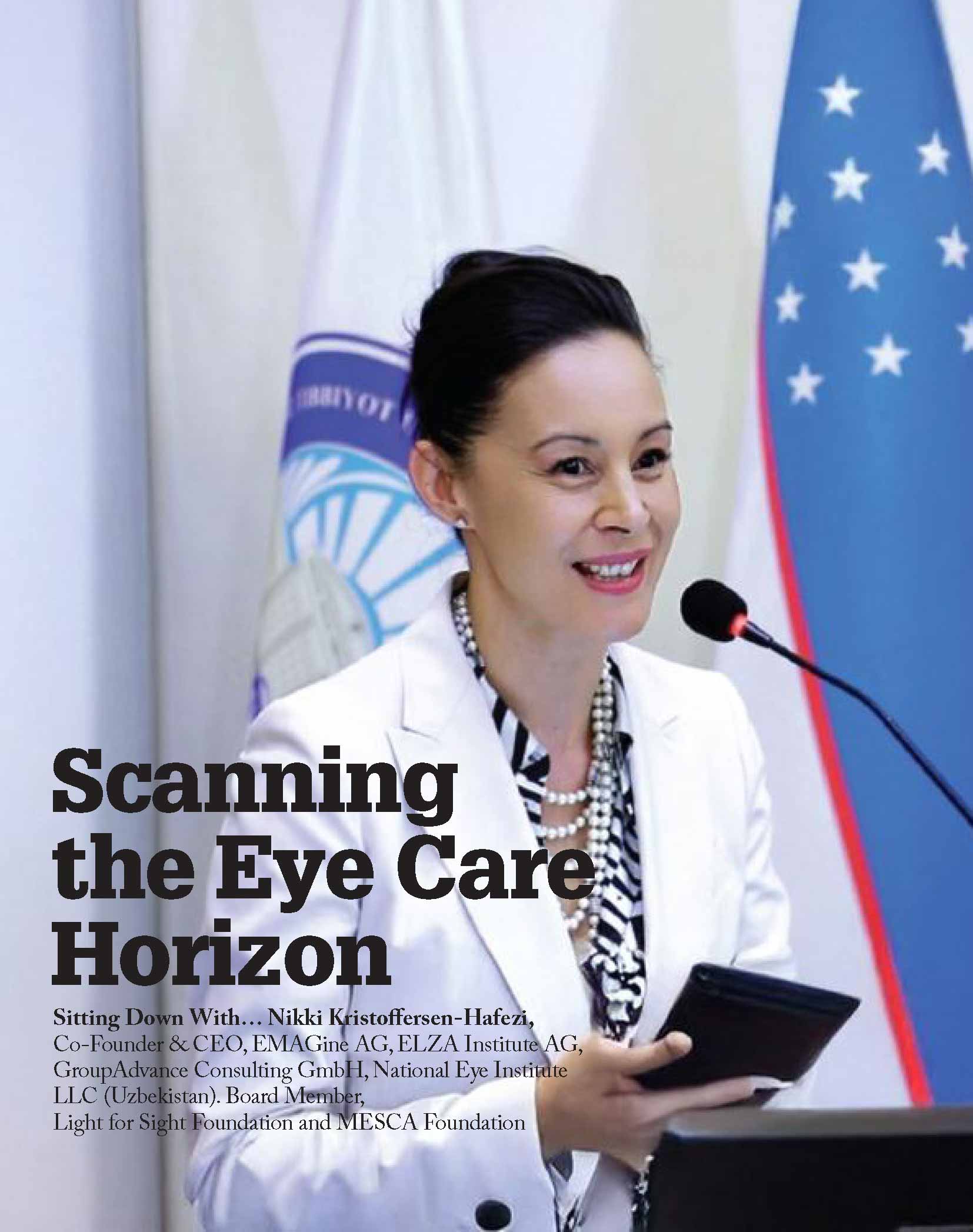
Innovation in ophthalmology increasingly lies at the intersection of clinical science, technology development, and health-system design. In her recent “Scanning the Eye Care Horizon” featured “Sitting Down With” interview in The Ophthalmologist, Nikki Kristoffersen-Hafezi, Co-Founder and CEO of EMAGine AG and ELZA Institute AG, reflects on how these domains can be aligned to improve access to evidence-based eye care.
A central theme of the discussion is capacity building. Alongside the operational growth of ELZA’s clinical sites in Zurich, Kristoffersen-Hafezi describes her broader role in building and training multidisciplinary teams across clinical care, medical technology, and consulting. The emphasis is on long-term sustainability: developing local expertise, strengthening operational leadership, and ensuring that modern ophthalmic services can be maintained independently rather than relying on external oversight.
Technology development is addressed through the example of corneal cross-linking (CXL). Since 2012, Kristoffersen-Hafezi has been closely involved in translating CXL concepts into deployable clinical platforms using a “SMART” framework—small, mobile, affordable, and reliable. This approach underpins the development of the EMAGine C-eye device and, more recently, a handheld Placido-based corneal screening tool that leverages smartphone hardware. Early clinical testing demonstrated imaging performance comparable to established diagnostic platforms, supporting its potential role in decentralised screening environments.
The clinical relevance is clear. Keratoconus remains a leading cause of preventable visual impairment in children and young adults, particularly where access to diagnostic infrastructure is limited. Earlier detection allows timely intervention and supports the generation of structured datasets suitable for algorithm-assisted analysis, helping reduce inter-observer variability in interpretation.
The interview also outlines a pragmatic framework for clinicians considering new technologies. Key considerations include the presence of peer-reviewed evidence, understanding of the underlying technology, availability of training and service support, and a realistic assessment of patient demand and cost. From a development perspective, Kristoffersen-Hafezi highlights the importance of intellectual property strategy, freedom-to-operate analyses, and early planning for scalability.
Looking ahead, her priorities extend beyond individual devices to broader goals: strengthening ophthalmic education, connecting emerging clinicians with international expertise, and expanding access to basic vision care through sustainable clinical models. Together, these themes frame ophthalmic innovation not as isolated advancement, but as coordinated progress grounded in clinical relevance and long-term impact.