Nikki Hafezi

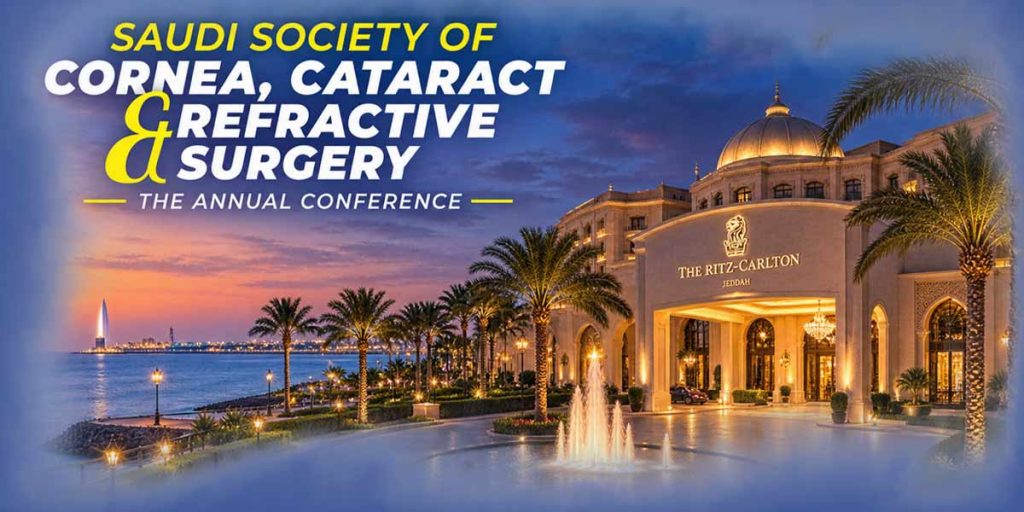
Beyond the podium talks, Prof. Farhad Hafezi spent 25 September teaching at the first SSCRS congress in Jeddah, from ECO-CAIRS to thin corneas and a conversation on careers.
At ESCRS 2026 in London, Prof. Farhad Hafezi and Nikki Hafezi told Healio about the ELZA epi-on protocol, new ELZA-sub400 and ECO-CAIRS data, and the institute’s plans to grow.
The ELZA Institute travelled to Jeddah for the first SSCRS congress, 24-26 September 2026. Prof. Farhad Hafezi and Nikki Hafezi presented four talks spanning personalised cross-linking, epi-on CXL, corneal biomechanics and ELZA-PACE.
ELZA’s ESCRS 2026 highlights from London: ELZA-PACE and ECO-CAIRS, ten-year cross-linking outcomes, a central toxic keratopathy series, mini-scleral lenses and glaucoma surgery.
Mini-scleral lenses cut higher-order aberrations by 97% in keratoconus, ELZA reported on Monday in London, alongside the ESCRS Research Workshop chaired by Prof. Farhad Hafezi.
Corneal biomechanics ran through ELZA’s Saturday in London, from a didactic course talk to data showing that more than 30% of the children of keratoconus patients already have measurable corneal abnormalities.
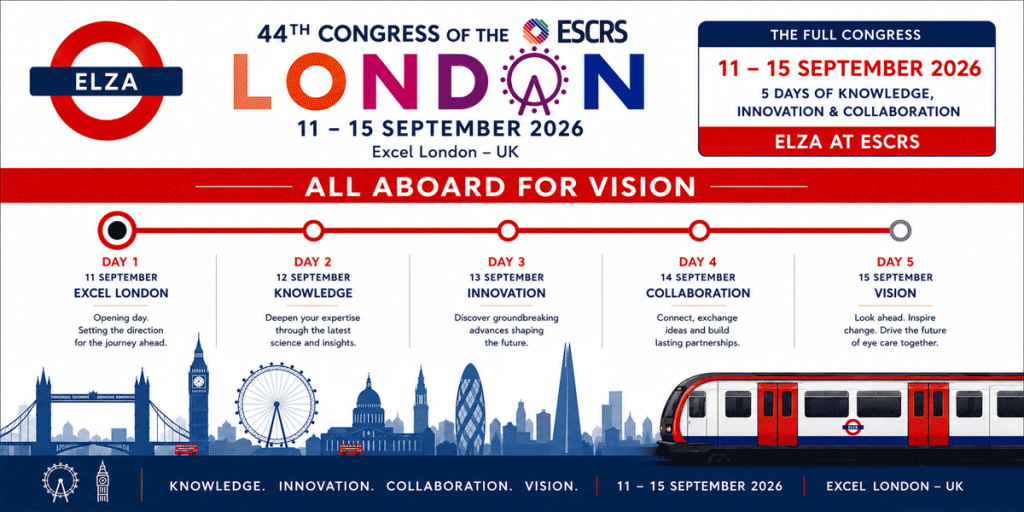
The ELZA Institute travels to the 44th ESCRS Congress at ExCeL London, 11 to 15 September 2026, with seven podium presentations, nine invited lectures, six chaired sessions and six e-posters. The programme spans ten-year cross-linking outcomes, customised ELZA-PACE, ECO-CAIRS ring segments and keratoconus screening.
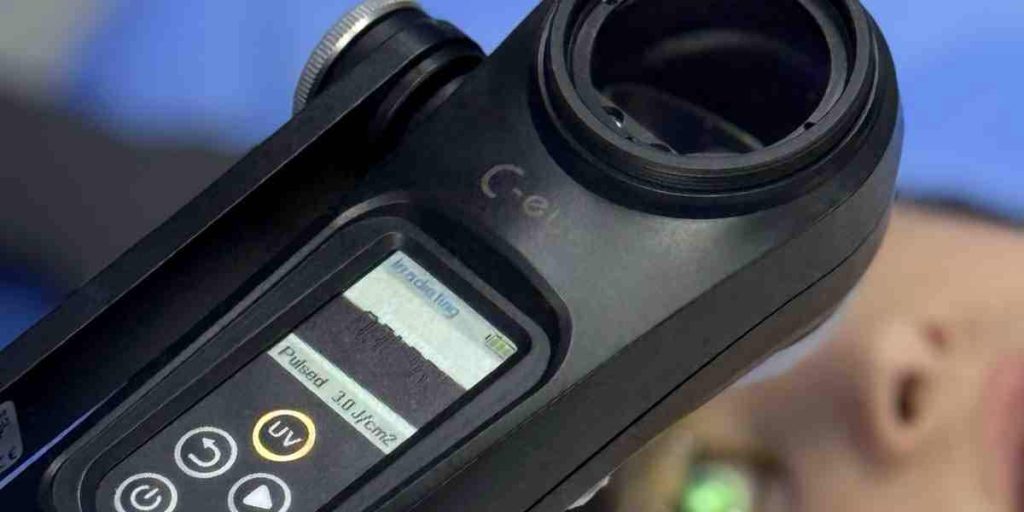
A new Die Ophthalmologie review explains ELZA-sub400 cross-linking, an individualised protocol that fits the UV dose to each cornea, making cross-linking possible in keratoconus corneas as thin as 214 µm.
Nikki and Farhad Hafezi represented ELZA at Vision China 2026, presenting work on keratoconus epidemiology, corneal cross-linking, K-MAP and international research collaboration.
Light for Sight returned to Bukhara to complete second-eye epi-on CXL treatment for two young girls with keratoconus identified through screening in Uzbekistan
.
.