Category: Scientific article

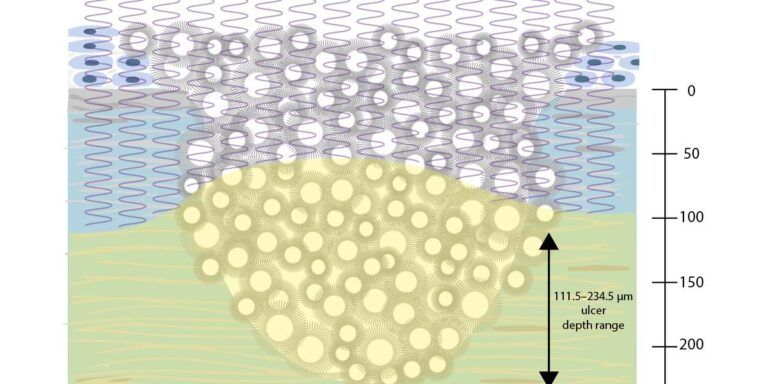
Our latest review on corneal cross-linking (CXL), published in Progress in Retinal and Eye Research, explores its evolution, advanced protocols like ELZA-PACE, and clinical applications.
Exploring comprehensive keratoconus treatment, from cross-linking to surgery, in the highly respected scientific journal Nature Reviews.
In a recently published case report in American Journal of Ophthalmology Case Reports, our team, in collaboration with Brazilian colleagues, describes an unusual case of a “CTK-like syndrome” following sequential intracorneal ring segment (ICRS) implantation and corneal cross-linking (CXL) in a young patient with progressive keratoconus.
Recent corneal cross-linking advances extend beyond disease stabilization, introducing individualized and second-generation customized treatment approaches for keratoconus.
The STEP system utilizes two parameters: the minimum overall stromal thickness (ST) and the standard deviation of epithelial thickness (EP). This approach provides a more detailed understanding of keratoconus progression, offering insights that may assist in clinical decisions, especially concerning corneal cross-linking (CXL) protocols.
By offering a non-surgical option that improves vision and comfort, mini scleral contact lenses can enhance the quality of life for patients with otherwise challenging visual impairments. Future research could further explore long-term outcomes and compare mini scleral contact lenses with other rehabilitative options to solidify their role in ophthalmic care.
.
.