
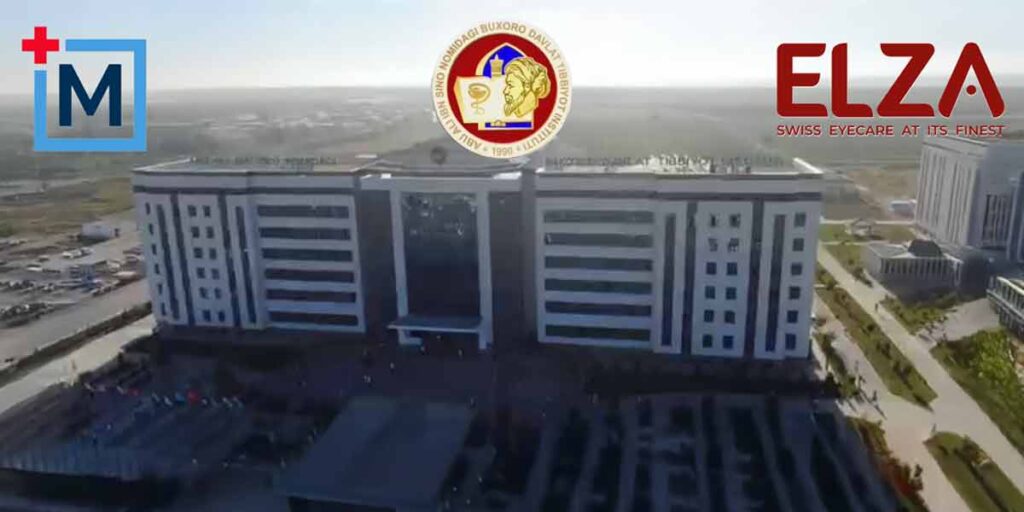
Nikki Hafezi, MAS IP ETHZ, CEO of the ELZA Institute and executive at the MESCA Foundation, recently visited the Bukhara State Medical Institute (BSMI) named after Abu Ali ibn Sino. Discussions focused on potential collaborations in ophthalmology, medical education, and research to support advancements in eye care and public health in the region.
The MESCA Foundation
The MESCA Foundation (Medical Excellence and Science in Central Asia) is a non-governmental, non-profit organization established in Switzerland in 2021 by Bakhtiyor Fazilov. Since 2022, MESCA has been engaged in supporting medical research and healthcare initiatives in Uzbekistan and other Central Asian countries. Its work includes:
- Improving access to medical technologies and treatments,
- Conducting public health outreach and disease prevention programs,
- Providing training for healthcare professionals,
- Supporting collaborative research in ophthalmology and other medical fields.
Bukhara State Medical Institute (BSMI)
Founded in 1990, BSMI is a higher education institution offering medical training across multiple disciplines. With over 8,000 students, including international students, the institute provides bachelor’s, master’s, and clinical residency programs in various medical specialties. Faculty members include experienced researchers and educators contributing to medical education and healthcare development in Uzbekistan.
Key Areas of Discussion
During the visit, four main areas were explored:
- Diagnosis of Ophthalmological Diseases – Strengthening diagnostic capabilities and access to eye care in Uzbekistan.
- Educational Outreach for Disease Prevention – Expanding public education initiatives to reduce preventable vision loss.
- Encouraging Specialization in Ophthalmology – Creating opportunities for students, researchers, and medical professionals to pursue careers in ophthalmology.
- Collaborative Research – Exploring joint research projects to improve clinical outcomes in ophthalmology.
ELZA’s Role in Ophthalmic Innovation
One of the topics discussed was ECO-CAIRS, a surgical technique developed at the ELZA Institute. ECO-CAIRS (Extracorporeal Laser-Assisted Corneal Allogenic Intrastromal Ring Segments) is designed for treating keratoconus, a progressive corneal disorder that can lead to significant visual impairment. By utilizing femtosecond laser technology to insert allogenic corneal tissue into the stroma, Femto-CAIRS aims to restore corneal shape and stability while preserving vision.
Given the suspected high prevalence of keratoconus among young people in Uzbekistan, improving treatment accessibility is a priority. Collaboration with BSMI could facilitate training and clinical studies to assess the impact of Femto-CAIRS in the region.
Looking Ahead
The visit marks an initial step in exploring potential partnerships between ELZA, MESCA, and BSMI. Future discussions will determine how these institutions can collaborate to enhance ophthalmic care, expand medical education, and support research initiatives that address regional healthcare challenges.
