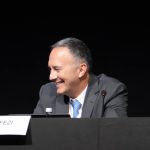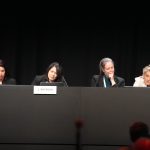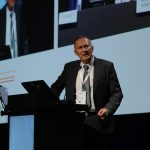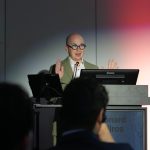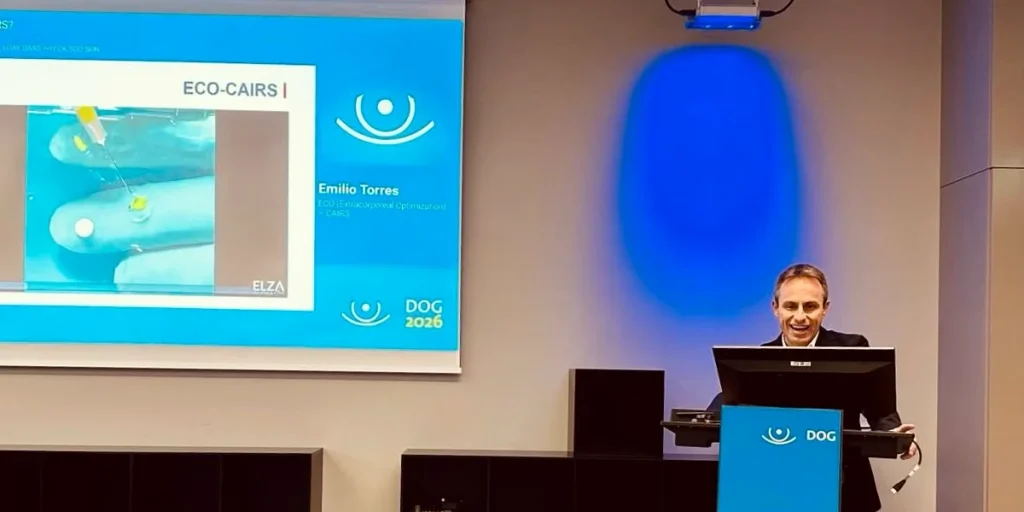
Implanting arcs of donor corneal tissue to flatten a keratoconic cornea has moved quickly from a niche idea to a mainstream option, and the German Ophthalmological Society (DOG) gave the technique its own symposium at its 2026 congress in Berlin. Dr. Emilio A. Torres-Netto, MD, PhD, FEBO, FWCRS, presented ECO-CAIRS at DOG 2026 on Saturday 26 September, in the session “Who CAIRS?”.
A symposium devoted to CAIRS
The DOG congress ran from 24 to 27 September 2026 at the Estrel Berlin. The Who CAIRS? symposium (session Sa28, 16:45–18:00) was devoted to corneal allogenic intrastromal ring segments, or CAIRS. These are arcs cut from donor corneal tissue and implanted into a channel in the patient’s own stroma, where they flatten the cone of keratoconus from within.
The organisers described CAIRS as a biological alternative to synthetic ring segments, with a growing body of clinical evidence for its effectiveness and safety. The session was chaired by PD Dr. Loay Daas (Saarland University Medical Center, Homburg/Saar) and Dr. Hyeck Soo Son (Heidelberg University Eye Hospital). It combined clinical experience, practical advice and case discussion in five talks:
- CAIRS planning – Dr. Hyeck Soo Son
- “Embrace the Cone”, optimising the results – Dr. Dimitrios Kyroudis (Pallas Kliniken, Bern)
- Surgical tips and tricks – Dr. Bader Khayat (Augenzentrum Südblick, Munich)
- ECO (Extracorporeal Optimization) – CAIRS – Dr. Emilio A. Torres-Netto
- CAIRS long-term results – PD Dr. Loay Daas
The full session listing is in the DOG 2026 online programme.
What the extracorporeal step adds
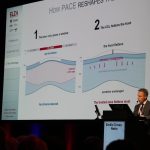
Dr. Torres-Netto’s 15-minute talk, “ECO (Extracorporeal Optimization) – CAIRS”, presented the ELZA modification of the technique. In ECO-CAIRS, the donor segments are treated with ultra-high-fluence corneal cross-linking (CXL) before they are implanted. CXL uses riboflavin (vitamin B2) drops and ultraviolet-A light to stiffen corneal collagen. Here, however, it is applied to the segment alone, entirely outside the patient’s eye.
According to the talk abstract, this pre-treatment makes the segments stiffer, thinner and acellular. As a result, they pass more smoothly through the stromal tunnel and are easier for the surgeon to handle.
The evidence behind ECO-CAIRS at DOG 2026
The talk drew on three peer-reviewed papers from ELZA and its collaborators. The first, in the Journal of Refractive Surgery, described the surgical technique in four eyes with stable keratoconus and maximum keratometry between 58.00 and 69.80 D. Segments were cut with a femtosecond laser and cross-linked at 30 or 60 J/cm². Insertion was uneventful in all four eyes, and the segments stayed stiff throughout. Their thickness roughly halved immediately after cross-linking, then increased again within days of insertion.
Two laboratory studies in porcine corneas, both in the Journal of Cataract and Refractive Surgery, examined why. In the first, ultra-high fluences of 30 and 60 J/cm² stiffened corneal tissue more than a conventional 10 J/cm² protocol, with no difference between the two higher doses. In the second, cross-linked ring segments lost more water during preparation and took up less water afterwards than untreated segments, which the authors suggest may improve handling during surgery.
These are early data. The clinical paper reports surgical handling in four eyes, not long-term visual outcomes, and the laboratory work used animal tissue. The authors call for further studies to confirm how ECO-CAIRS segments behave over time, and to separate the effect of segment volume from that of stiffness.
From Berlin, on LinkedIn
The ELZA Institute offers CAIRS and corneal cross-linking for keratoconus. Dr. Torres-Netto shared his impressions of presenting ECO-CAIRS at DOG 2026 on LinkedIn.
References
- Hafezi F, Aydemir ME, Hillen M, et al. Extracorporeal optimization of corneal allogenic intrastromal ring segments (ECO-CAIRS) using ultra-high-fluence corneal cross-linking. J Refract Surg. 2025;41(11):e1233–e1239. doi.org/10.3928/1081597X-20250917-02
- Aydemir ME, Kollros L, Hillen M, et al. Biomechanical stiffening effect in ultra-high-fluence extracorporeal cross-linked corneal allogenic intrastromal ring segments. J Cataract Refract Surg. 2026. doi.org/10.1097/j.jcrs.0000000000001981
- Kollros L, Aydemir ME, Boote C, et al. Dehydration and rehydration behavior of ultra-high-fluence extracorporeal cross-linked corneal allogenic intrastromal ring segments (ECO-CAIRS). J Cataract Refract Surg. 2026. doi.org/10.1097/j.jcrs.0000000000002015