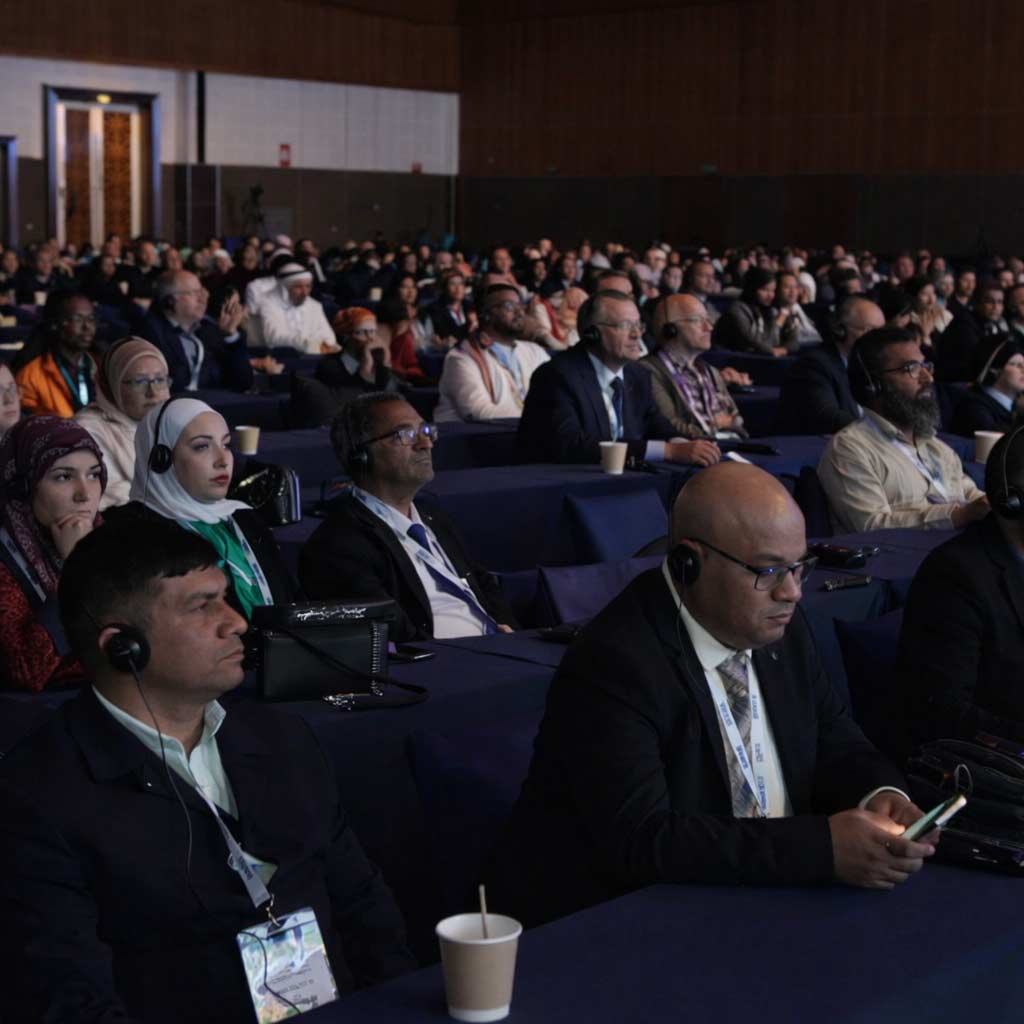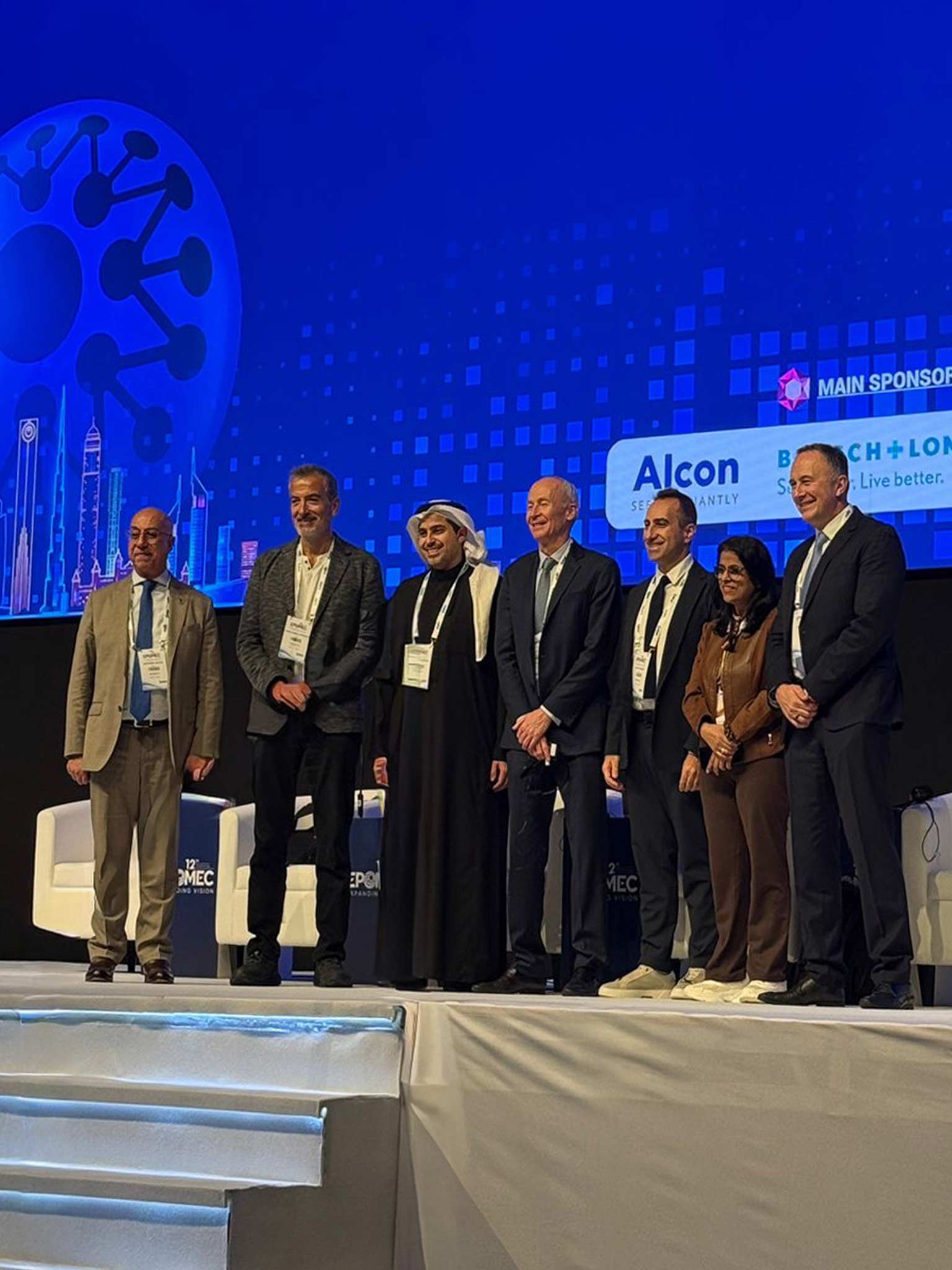
EPOMEC 2025, held from 4–6 December 2025 at the Dubai World Trade Center, brought together an international faculty to address current challenges and advances in cornea and refractive surgery. The meeting was exceptionally well organized, with seamless execution throughout. ELZA was strongly represented, with CEO Nikki Hafezi and three ELZA consultants— PD Dr. Lamis Baydoun MD, PhD; Prof. Dr. Kaweh Mansoori, MD, MPH, and , Prof. Farhad Hafezi, MD, PhD, FARVO—contributing across multiple scientific sessions.
As invited faculty, Prof. Farhad Hafezi, MD, PhD, FARVO, participated in several key sessions spanning corneal cross-linking (CXL), keratoconus management, and refractive decision-making. On Thursday, 4 December, he served as a panelist in the Cornea & Refractive Panel Discussion: To Do or Not to Do?, addressing real-world clinical dilemmas including thin corneas, refractive options in complex eyes, and contemporary CXL strategies.
On Saturday, 6 December, Prof. Hafezi presented “PACK-CXL: When and How?!” during the OSCARs Competition session, outlining evidence-based indications and practical considerations for photoactivated chromophore-based cross-linking in infectious keratitis. He also delivered two further talks focusing on keratoconus management: ELZA-PACE Customized CXL to Improve Vision in Keratoconus, highlighting individualized, function-oriented cross-linking concepts, and Epithelium-on CXL in 2025: When and How?!, examining current indications, limitations, and realistic expectations of transepithelial protocols.
Dr. Lamis Baydoun contributed to the scientific program with presentations focused on contemporary corneal and refractive surgical practice, addressing clinical decision-making in complex eyes and the integration of evolving technologies into routine care. Her sessions emphasized practical considerations and patient-centered outcomes in refractive and corneal surgery.
Dr. Kaweh Mansoori participated as faculty in sessions addressing glaucoma and anterior segment disease, discussing current diagnostic and therapeutic strategies and their interface with corneal and refractive surgery. His contributions highlighted evidence-based management and the importance of individualized treatment planning in patients with coexisting ocular pathologies.
Across these sessions, ELZA faculty contributions reflected a consistent focus on mechanism-driven therapies, individualized treatment strategies, and clinically meaningful endpoints. The discussions underscored how biomechanics, epithelial behavior, oxygen dynamics, and comorbidity-aware decision-making increasingly inform modern corneal and refractive care.
It was also a pleasure to reconnect with many colleagues on the faculty, including Burkhard Dick, Sri Ganesh, Mohamed Shafik Mohamed Hosny, Sihem Lazreg, Shady Awwad, Harminder Dua, Bruce Allan, Soosan Jacob, John Kanellopoulos, and many others.
More information: https://www.epomec.ae/program/