ELZA in China: Two Congresses, One Major Publication
Ten days in China brought two distinct scientific engagements and, on returning to Zurich, the publication of a paper that had taken two years to produce.
Chengdu: 5th AIER International Refractive Surgery Symposium
The trip began in Chengdu, where ELZA Institute Chief Medical Officer
Prof. Farhad Hafezi, MD, PhD, FARVO and ELZA Institute CEO
Nikki Hafezi, MAS IP ETHZ attended the 5th International Refractive Surgery Symposium (IRSS), organised by the Aier Eye Hospital Group on 23–24 May. The symposium focused on cutting-edge advances in refractive and presbyopia surgery, with an emphasis on multidisciplinary approaches and the management of complications in challenging cases. Fellow international faculty included Arthur Cummings, Michael Mrochen, Damien Gatinel, and Cynthia Roberts.
What stood out was not the scale alone but the precision with which preoperative measurements and patient care were maintained at high surgical throughput — a combination Prof. Hafezi described as genuinely impressive.
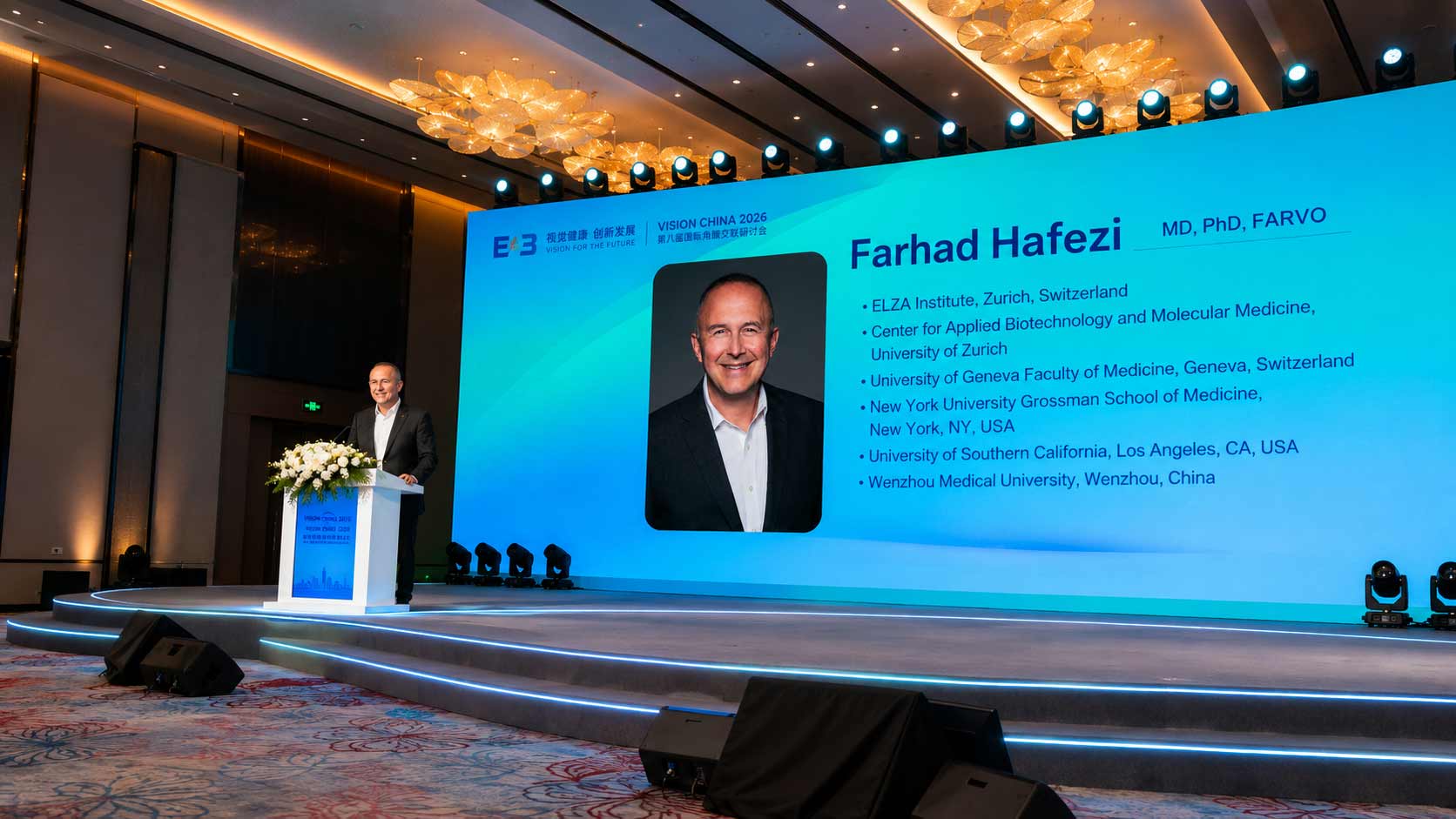
Tianjin: Vision China 2026
From Chengdu, the journey continued to Tianjin, where Vision China 2026 gathered approximately 10,000 participants and more than 60 international guest speakers at the Tianjin Meijiang Convention and Exhibition Center. The congress is one of the largest ophthalmology meetings in the world, and it carried particular significance for ELZA: the 8th International
Keratoconus and Corneal Cross-Linking Experts’ Summer Meeting — a direct spin-off of ELZA’s own
KCXL Experts’ Meeting, first initiated in China in 2015 by Prof. Shihao Chen — was embedded in the congress programme. Prof. Hafezi chaired the opening session and delivered two oral presentations.
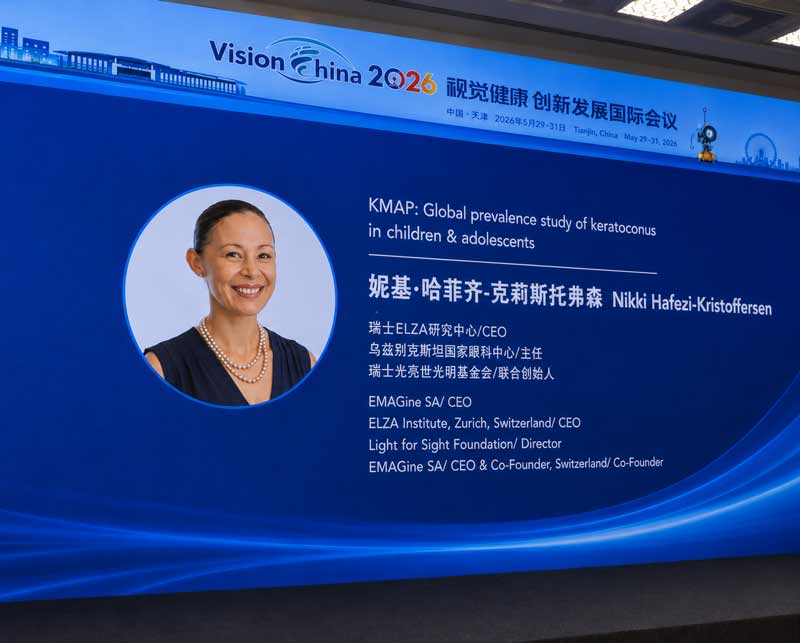
Nikki Hafezi presented the work of the Global Keratoconus Mapping and Prevalence Study, known as
K-MAP, reporting on keratoconus prevalence data in children and adolescents. She also took part in a roundtable discussion on cross-border integration in global eye health.
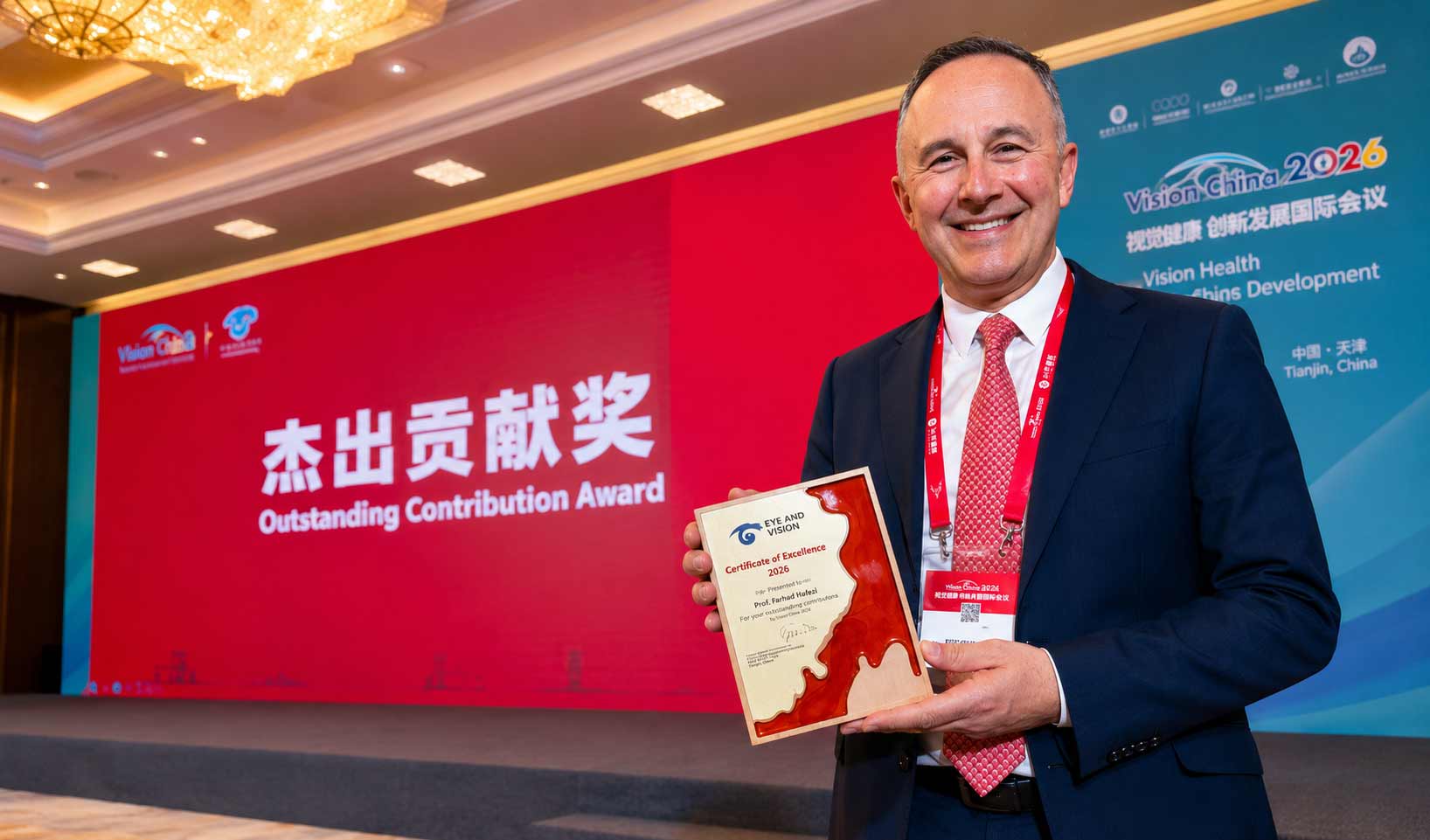
On 30 May, the journal
Eye and Vision presented Prof. Hafezi with its Annual Distinguished Contribution Award at a ceremony during the congress.
The Second Global Consensus on Keratoconus
Shortly after returning from China, a major publication appeared. The Second Global Consensus on Keratoconus and Ectatic Diseases has been published open access in
Cornea. Prof. Hafezi co-organised the process alongside José Álvaro Gomes and Renato Ambrósio — a two-year undertaking that brought together 129
keratoconus experts from across the globe for an extensive international discussion. The result is a document that establishes a shared, updated foundation for how keratoconus should be defined, classified, diagnosed, and managed in 2026. Prof. Hafezi’s full publication record is available via the
ELZA research page.
Among the consensus findings Prof. Hafezi has drawn particular attention to: 69% of participating experts agreed that subclinical keratoconus — the stage before the condition becomes clinically apparent — is biomechanically progressive, even when visual acuity remains normal. The clinical implication is significant. It reframes when to screen and when to consider intervention, shifting the threshold earlier than many current protocols would suggest.
The paper is available open access in
Cornea.