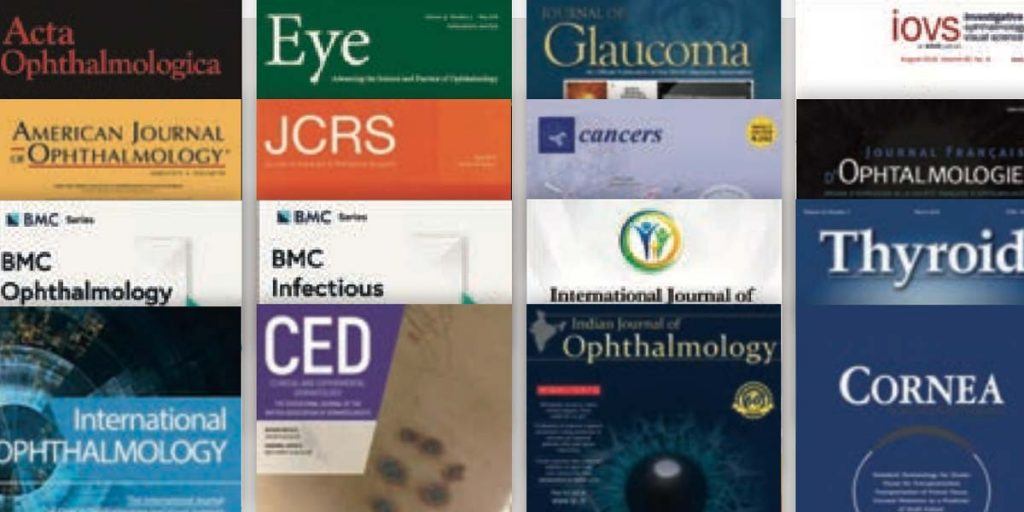
The reason why ELZA is an international leader in eye care is that we have superb clinicians… who also are also superb and prolific academic researchers. Last year, our clinicians published 68 unique papers – four more than in 2019, our previous record-breaking year!
We took a biological approach to what has been classically viewed as a physics problem. If the laser ablation is causing inflammation, can we change how the laser energy is delivered to the cornea in order to cause less inflammation?
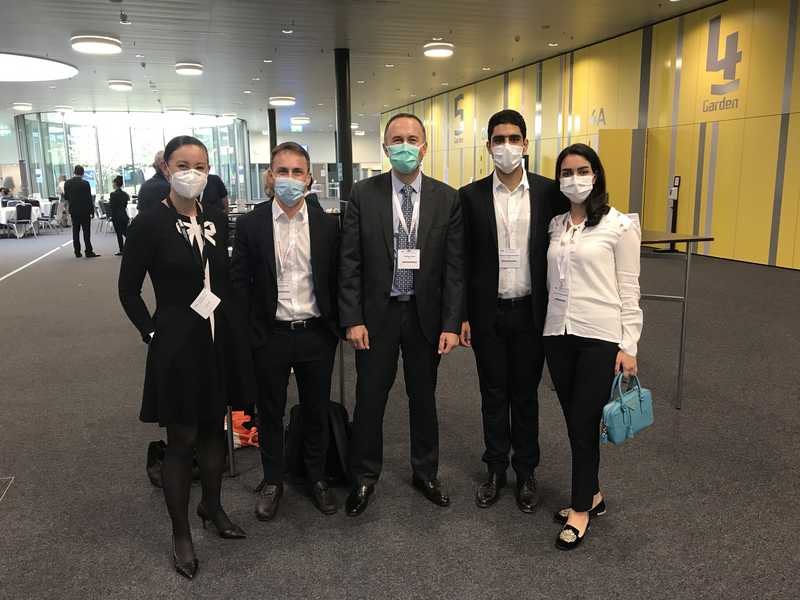
On August 27–28th, 2020, some of ELZA’s surgeons and researchers attended the 113th Annual Congress of the SOG/SSO (the Swiss Ophthalmological Society).
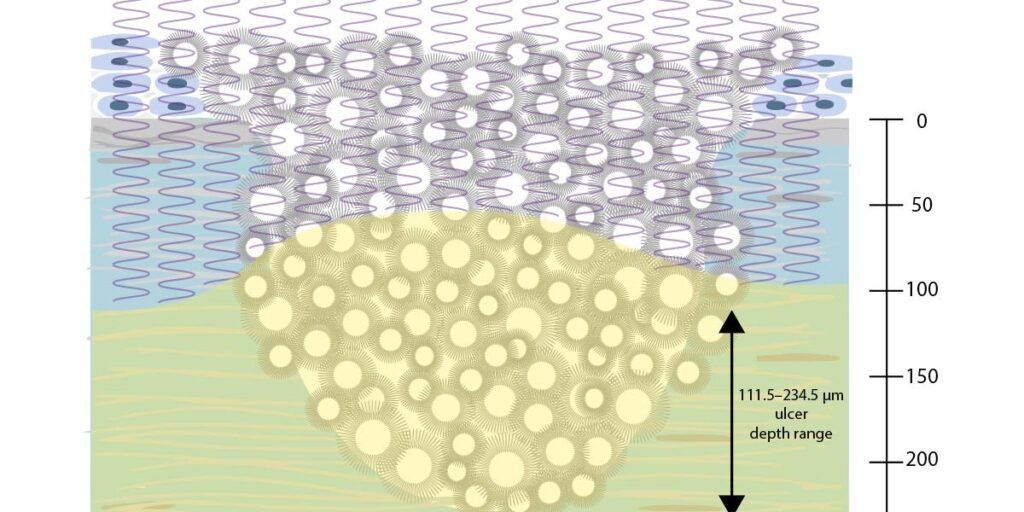
Treating infectious keratitis with CXL is not like treating keratoconus with CXL. We recently had to write a letter to the journal, Ophthalmology, to point out the flaws in a recent publication in the journal.
Last year, Prof. Hafezi wrote about why he felt it was important to travel to national and international congresses to educate, and the pros and cons of spending many weekends away from home – in other words “Education without Borders”.
On August 6th, 2020, Prof. Farhad Hafezi was honored to be invited by His Royal Highness, Prince Abdulaziz Bin Ahmed, of the Saudi Royal Family, to present the Shield Lecture at the Saudi Ophthalmology 2020 virtual meeting.
Corneal Cross-Linking strengthens and sterilizes the cornea.. Here is a simple proposal: perform CXL at the slit lamp (in the doctor’s office), not the OR.
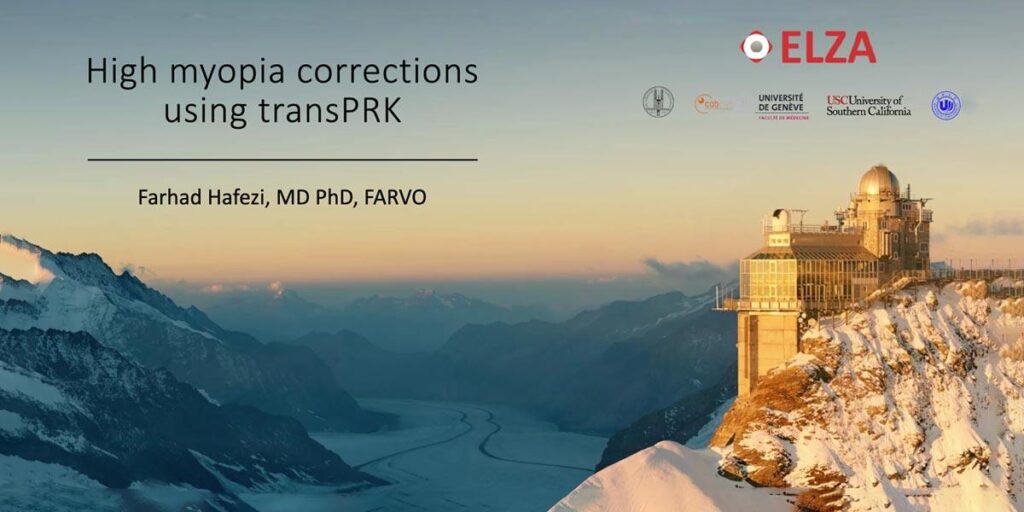
A transPRK of more than 100 microns on without the use of any mitomycin and in the absence of clinically relevant haze is possible in middle European settings. Now let’s put this into perspective. We have now performed in Switzerland, on Swiss patients, transPRK cases up to minus 12 D in a 6.5 millimeter zone. And that’s more than 140 microns of ablation without mitomycin.