Cornea

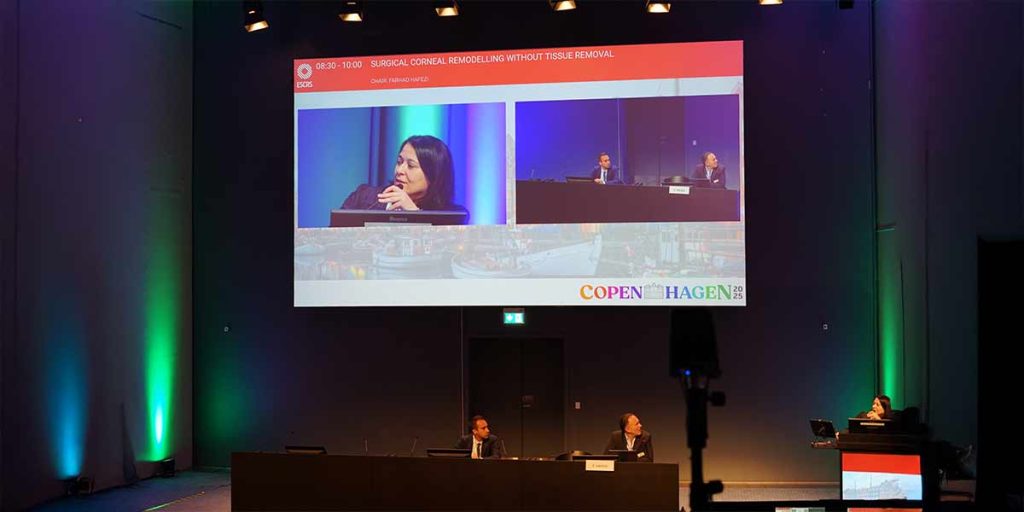
The ESCRS 2026 Cornea Day opened ELZA’s congress in London. Prof. Farhad Hafezi co-chaired the keratoconus session, and Dr Emilio Torres-Netto argued that cross-linking can improve vision, not only halt disease.
Categories:
In the August 2026 issue of Cataract & Refractive Surgery Today, four corneal specialists, including ELZA’s Prof. Farhad Hafezi, debate how to manage a 7-year-old girl with enigmatically ultrathin, steep corneas.
A new Die Ophthalmologie review explains ELZA-sub400 cross-linking, an individualised protocol that fits the UV dose to each cornea, making cross-linking possible in keratoconus corneas as thin as 214 µm.
ELZA researchers report 12-month outcomes for a second-generation sub400 cross-linking protocol that extends CXL to ultra-thin keratoconus and post-LASIK ectasia corneas below 400 micrometres, halting progression in 76% of eyes while shortening treatment to about 18 minutes.
Categories: | |
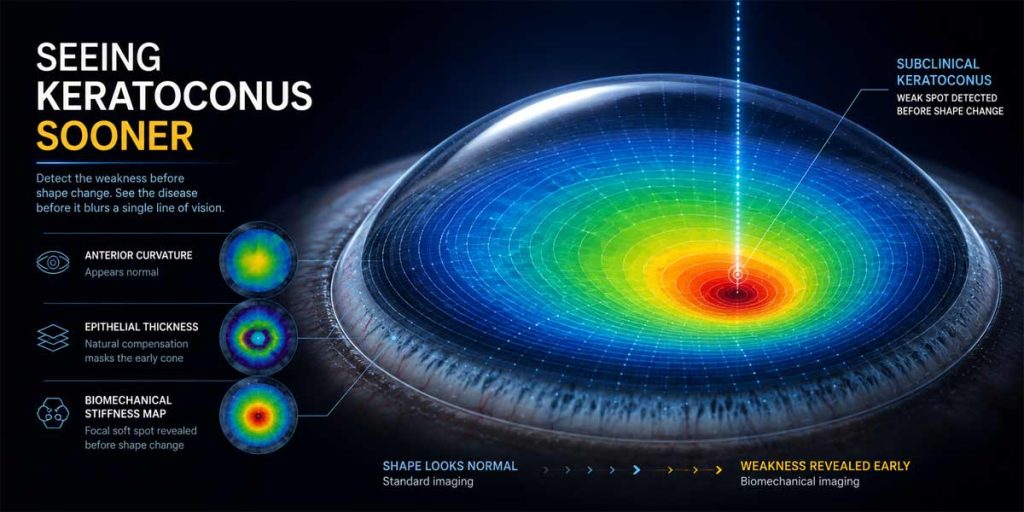
Corneal imaging in keratoconus – Scheimpflug tomography, OCT and epithelial mapping – now catches the disease years earlier. How modern scans work, from ELZA.
ELZA’s CEO and CMO, Nikki and Farhad Hafezi flew to Hong Kong to attend APAO 2026, including an invited symposium presentation by Prof. Farhad Hafezi on Custom CXL.
Swiss newspapers report on a severe contact lens–related eye infection and how an innovative treatment at ELZA Institute helped save vision.
Ten years after the First Global Consensus, the Second Global Consensus on Keratoconus—reported in EuroTimes—provides an updated, internationally agreed framework for diagnosis, staging, and management. Developed using a modified Delphi process, it reflects a shift from disease stabilisation alone toward individualized care that integrates modern diagnostics, optimized cross-linking strategies, and visual rehabilitation.
Highlights from ESCRS 2025 ELZA Institute Sunday sessions in Copenhagen, featuring advances in keratoconus, glaucoma, and corneal surgery
.
.