Mini-scleral lenses cut higher-order aberrations by 97% in keratoconus, ELZA reported on Monday in London, alongside the ESCRS Research Workshop chaired by Prof. Farhad Hafezi.
Ten-year cross-linking data, a case series of central toxic keratopathy and laboratory work on ring segments made Sunday ELZA’s busiest day at ESCRS 2026 in London.
Corneal biomechanics ran through ELZA’s Saturday in London, from a didactic course talk to data showing that more than 30% of the children of keratoconus patients already have measurable corneal abnormalities.
The ESCRS 2026 Cornea Day opened ELZA’s congress in London. Prof. Farhad Hafezi co-chaired the keratoconus session, and Dr Emilio Torres-Netto argued that cross-linking can improve vision, not only halt disease.
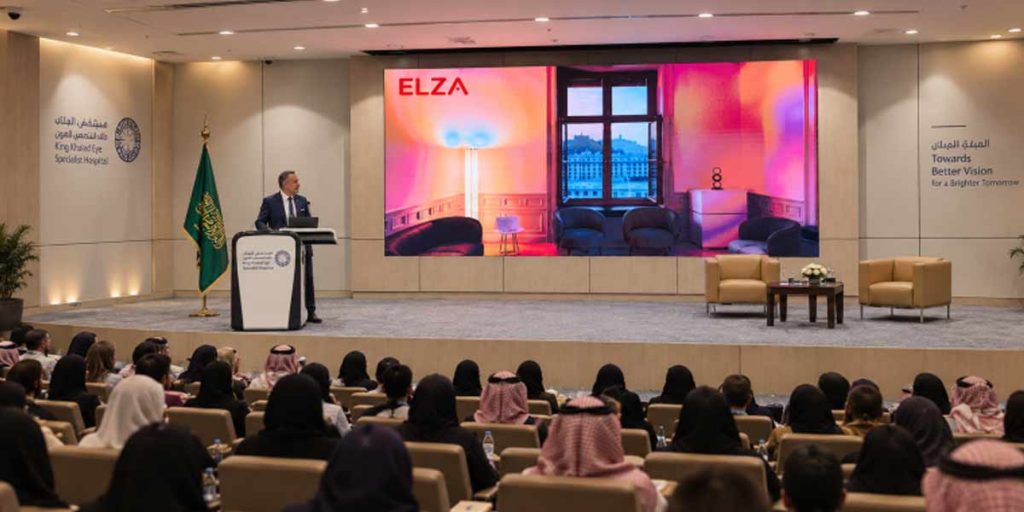
Prof. Farhad Hafezi spent early September in Riyadh, teaching new clinical applications of cross-linking at KKESH and presenting PACK-CXL for infectious keratitis at the Jamjoom SEE Vision Forum.
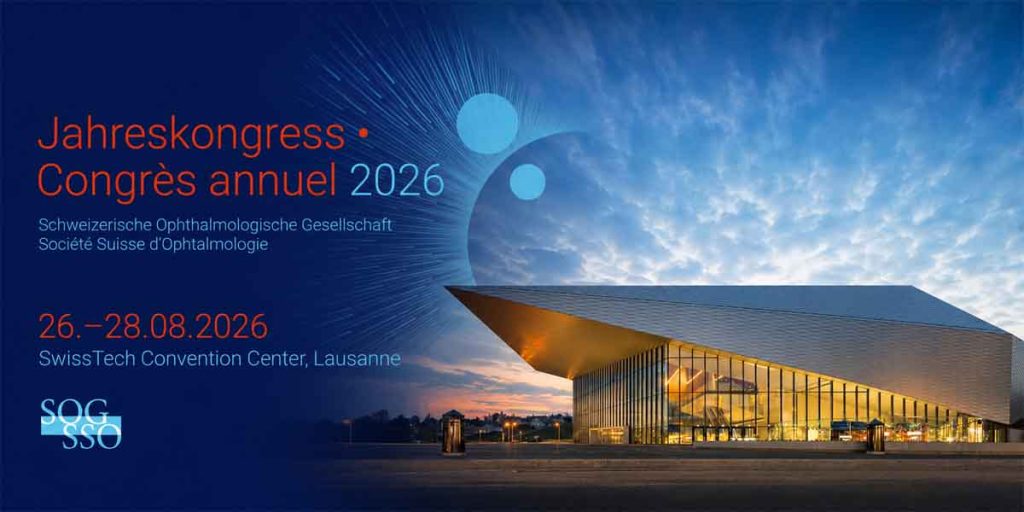
At the 119th SOG annual congress in Lausanne, Prof. Farhad Hafezi chaired the ESCRS session on the second global keratoconus consensus, and Dr. Emilio Torres-Netto spoke on corneal biomechanics as a tool for clinical decision-making.
Swapping the UV lamp for the sun and riboflavin drops for a vitamin B2 tablet is being promoted as a low-cost keratoconus treatment. A new ELZA study in the Journal of Refractive Surgery tested it in living eyes and found no corneal stiffening at all.
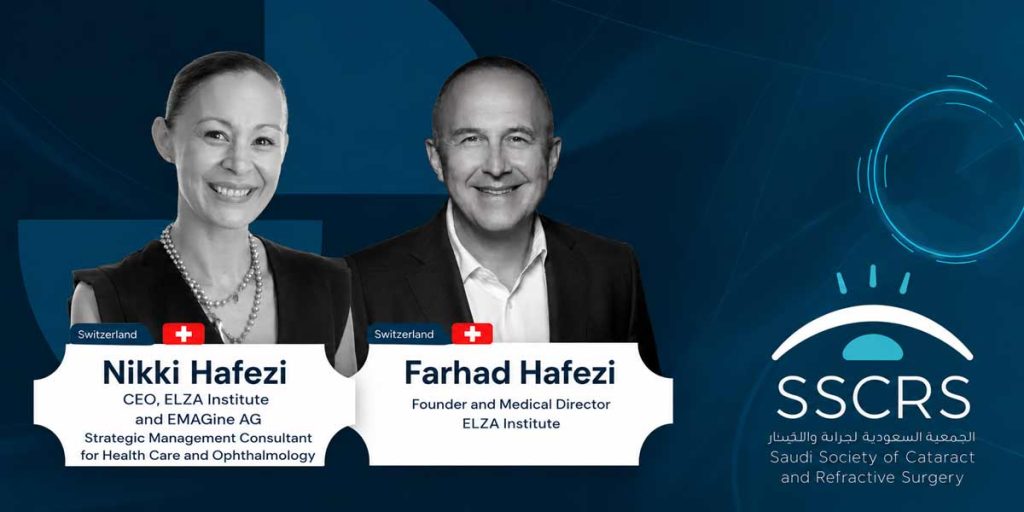
The ELZA Institute heads to Jeddah for the first SSCRS congress, 24–26 September 2026. Prof. Farhad Hafezi and Nikki Hafezi present four talks spanning personalised cross-linking, epi-on CXL, corneal biomechanics and ELZA-PACE.
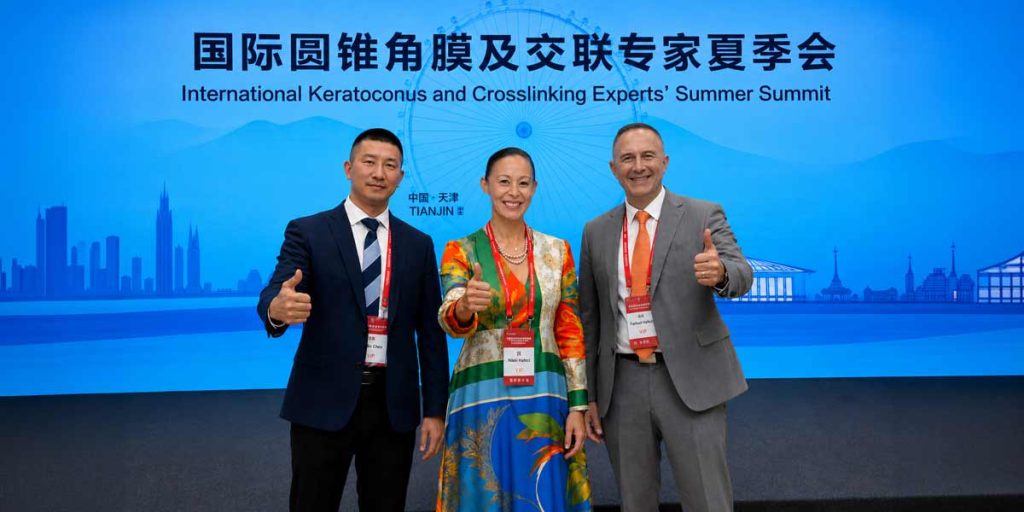
Nikki and Farhad Hafezi represented ELZA at Vision China 2026, presenting work on keratoconus epidemiology, corneal cross-linking, K-MAP and international research collaboration.